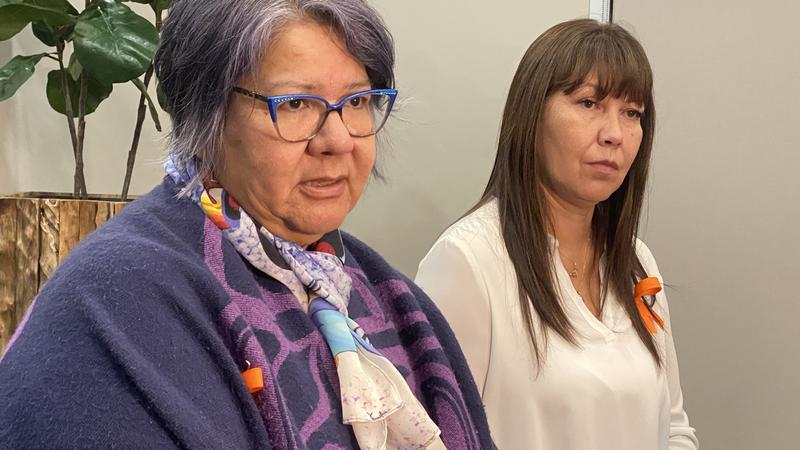
National Chief of AFN in PG

Jul 20, 2021 | 4:11 PM

PRINCE GEORGE – For the first time in many years, the National Chief of the Assembly of First Nations has visited Northern BC.

RoseAnne Archibald spent the last two days meeting with chiefs from around the region. Her visit to Prince George comes the same day the Province announced it is now open for expressions of interest to access $12 million announced last month for caretaker communities where residential schools existed. There are 18 such schools in BC.

The Province also announced the appointment of Charlene Belleau and Lydia Hwitsum as First Nations liaisons.

“That is very welcome news to First Nations in BC. And BC has gone a step further by having these two liaisons available to First Nations to help navigate the funding process and to be the connection between the government and First Nations. I think that’s definitely a big step forward,” noted National Chief Archibald.

Chief of the Lheidli T’enneh, Dolleen Logan says many of her members attended Lejac, which operated near Fraser Lake from 1922 to 1976. She says the band will definitely be seeking access to funding.

“Absolutely. And, as I’ve said, I think this funding should be for every school across Canada,” in reference to the $27 million committed by the federal government in June following the discoveries of mass graves in Kamloops and Kuper Island as well as Saskatchewan.

here have been calls from chiefs across the nation to treat the mass graves as crime scenes, something National Chief Archibald wholeheartedly agrees with.

“Children were buried in unmarked graves. That’s a crime. You can’t do that anywhere. So it’s undisputedly a crime.” She the ground-penetrating radar used to discover the graves is the science behind what First Nations have been saying anecdotally for years. She says there needs to be an overarching federal strategy to look at the situation at every residential “institution” in the country.

“I think the difficulty is, though, is that the federal government is in a conflict of interest because it was their policy that lead to the creation of these institutions. They can’t investigate themselves.”

As such, the Assembly of First Nations is calling on the United Nations to step in. In the meantime, as she travels the regions and hears the horror stories. She calls them “heart-wrenching.”

“I listened to elders speaking in Kamloops. I was sitting there watching them and it was like they go back to their little girl. One of them talked about being five at the time. And there they were having to talk about it and bring it and all the pain and heartache, the things they had to witness and live through.”