MEAT REGULATION CHANGES

Meat regulation changes take effect in B.C., allowing on-site slaughter for producers

Oct 18, 2021 | 5:54 PM

PRINCE GEORGE—Ranchers and meat producers across the province now have one less barrier when it comes to sending their animals to abattoirs. To help reduce stress at the few in B.C., meat producers can now have their own slaughterhouse on-site.

The changes went into effect on October 1st.

Ranchers and meat producers can now apply for on-site slaughter licencing based on the number animal units per year.

“It helps bring the control of slaughter back to the hands of the producers. They would like to slaughter in the way that they want,” said Ava Reeve, Executive Director of Small Scale Meat Producers Association.

Two new licences that are available are the Farmgate and Farmgate Plus licence. A Farmgate Licence allows for producers to slaughter up to five animal units per year. One animal unit equals to 1,000lbs of any combined meat when measured alive.

Farmgate also allows for producers to sell that product directly to consumers within their respective region and within 50km of where it was produced.

Farmgate Plus increases the animal limit to 25 per year, and it can be sold anywhere in B.C., either in a retail setting or directly to the consumer. An Abattoir Licence removes the limit of units per year and can be sold to retail locations and directly to consumers.

Producers can slaughter an unlimited number of units on-site, without a licence, if the product is used for personal use only. A separate licence is needed for any producer that wants to cut and package products on-site.

It’s a much needed change for producers in B.C. according to the SSMPA.

“Perhaps they want to avoid transportation due to stress on animals or perhaps there simply isn’t an abatoir, within a reasonable distance. So they prefer to due on-site slaughter,” said Reeve.

But not all producers are squealing with excitement.

“I think it’s a baby step in the right direction,” said Martin Krell, owner of Tenish Farm.

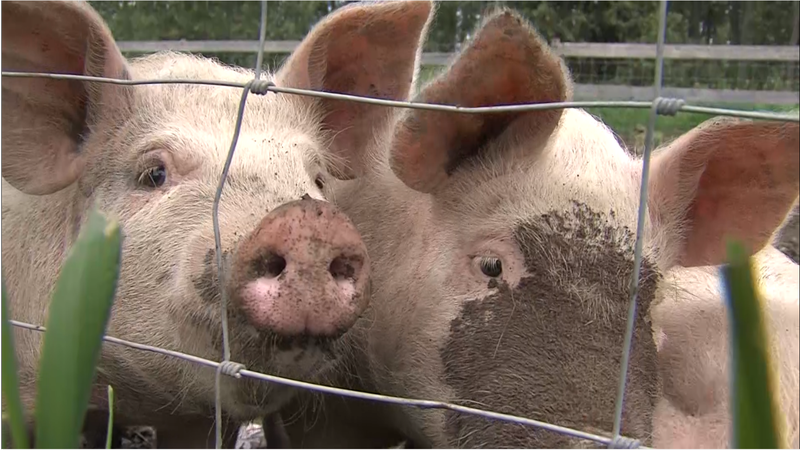
Every three weeks, Krell transport his pigs to an abattoir in Dawson Creek. Which takes about six hours to get there one-way. He says while this can help remove the stress and costs of transportation, it doesn’t fix the core issue that the province has.

“I’m not a butcher. I raise pigs. I don’t know how to make a sausage, I don’t know how to turn it into bacon and whatnot. So yes, it’s great that we can slaughter onsite. But the next step is to be able to cut and wrap and turn it into an actual product. That’s the second bottleneck that isn’t being addressed, the lack of butcher shops and what not,” said Krell.

Krell says he’s planning to apply for an on-site slaughter, but it may take up to five years for him to a see a return on his investment.

But there’s also an opportunity for producers to expand their production and move to other types of meat.

Matthew L’Heureux, owner of Aurora View Farms, only handles cattle. But after the hearing about the new changes, he is considering raising chicken and lamb.

“It would make it more attractive, not having to find somebody to do it for you,” said L’Heureux.

These new regulation changes are designed to reduce barriers in slaughter and reduce the stress on transportation. In theory it could help reduce meat prices in the future, but it will be years before results will be seen.