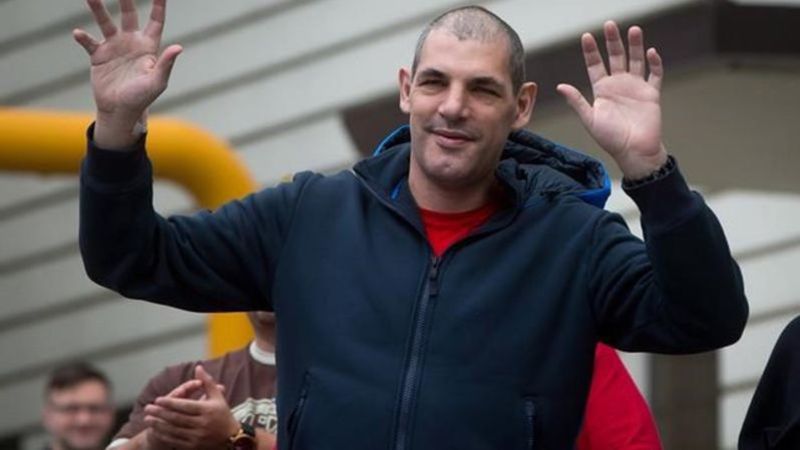
THE CANADIAN PRESS/Darryl Dyck
GINO ODJICK

Northern BC reflects on the passing of former Vancouver Canuck Gino Odjick

Jan 18, 2023 | 9:53 AM

PRINCE GEORGE – On Sunday the hockey world lost an icon as Gino Odjick passed away at the age of 52. But Odjick wasn’t only a hockey icon on the ice with his tough game, but also off the ice making an impact on the community. An important part of Odjick’s legacy was always remembering his Indigenous heritage. So much so his famous number 29 had a special backstory.

“He never forgot his past. His father was a residential school survivor. That’s why he wore number 29. Because the residential school his father went to didn’t call him by his name. He was known by a number, the number 29.” – Chief Terry Teegee, Regional Chief of the British Columbia Assembly of First Nations

Chief Terry Teegee who is the Regional Chief of the BC Assembly of First Nations personally knew Gino Odjick and believes the former Vancouver Canucks enforcer has left a great legacy behind not only for hockey fans but also for the indigenous community.

“He was very humble, very approachable, had time for all his fans and I think one of the things that I’ll always remember about him is his time in Vancouver and the whole run in 1994. He had a lot of time for indigenous fans. And it’s a sad day in his passing. He certainly left a legacy.” – Chief Terry Teegee, Regional Chief of the British Columbia Assembly of First Nations

Teegee isn’t the only one who feels this way. Another person Odjick made an impact on was Rick Kooses, a former Prince George Spruce King who played hockey with Odjick during their time together at the Big Guy Lake Sports Club.

“He had such a big heart and was such a nice, gentle giant. He would go out of his way to sign autographs or do anything for the community at large. He was a great man and will be very dearly lost.” – Rick Kooses, Former Teammate

Odjick holds a Canucks team record, with his 2,127 penalty minutes being the most in franchise history. However, it’s a small number compared to how long his impact will carry on in the hockey and indigenous communities around Canada.