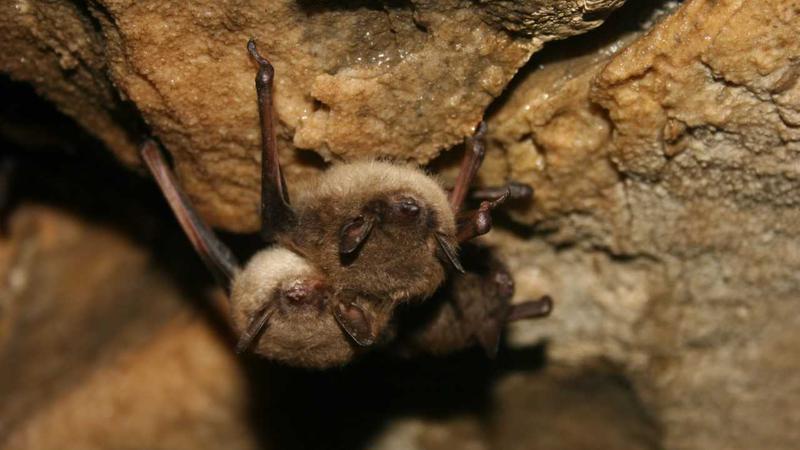
Photo Cedit: B.C. Community Bat Program
Wildlife Conservation

Biologist concerned about White nosed syndrome spreading to B.C. bats

Feb 6, 2024 | 2:32 PM

PRINCE GEORGE— White-nosed bat syndrome is a fungal infection that’s been devastating bat populations across North America, first being detected in New York State in 2006. Last year, the fungus was discovered in Grand Forks, B.C. and biologist are concerned that the spread of White-nosed Syndrome across the province is imminent.

This winter and spring, the B.C. Community Bat Program, in collaboration with the Province, is asking people to report any bat activity in the winter and any sick or dead bats found before May 31, 2024.
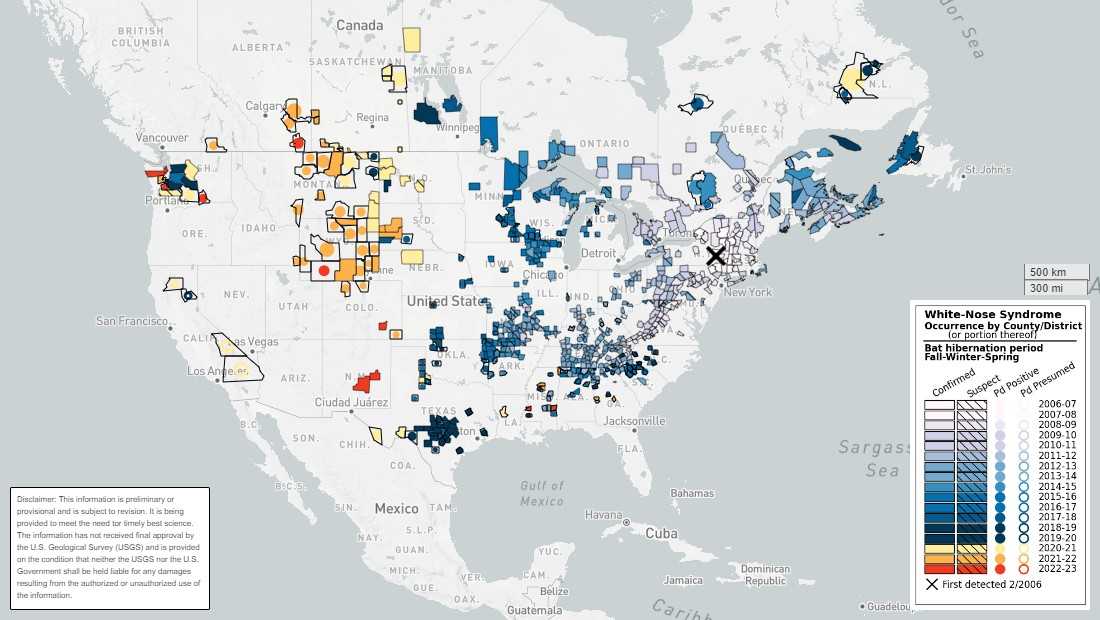
Map of White-nosed syndrome across North America (Photo Cedit: B.C. Community Bat Program)

The Pseudogymnoascus destructans fungus attacks hibernating bats, growing on their faces giving an appearance of a white nose. This forces the bats to wake from hibernation to clean the fungus from their skin. This uses valuable energy, and eventually, the bats die from starvation.

“Across North America, millions of bats have been killed, and seven of our 15 BC species could be severely affected by the disease,” explains Tina Watters, Omineca coordinator for the BC Community Bat Program. “Increasing the number of bat reports from the public is the best chance to understand how White-nosed syndrome might spread and affect local bat populations.”

The fungus does not cause disease in humans or pets but, according to the B.C. Community Bat Program, the Little Brown Myotis and the Northern Myotis are both listed as Endangered in Canada due to White-nose syndrome. While there is not yet a proven cure, there are several promising treatment being developed that may mitigate the effect of this wildlife health crisis.

If you find a dead bat or have sightings of winter bat activity, you are asked to report it to the B.C. Community Bat Program online at www.bcbats.ca, via email at OminecaBats@gmail.com or by calling 1-855-922-2287 ext. 26. All live bats should be left alone – keep your distance, take a picture and report it to the B.C. Community Bat Program. If need to move a bat, visit bcbat.ca for advice and never touch a bat with your bare hands. If you or your pet has been in direct contact with a bat get screened rabies as while the risk is low the condition is serious.

“The bats of BC are key predators of many night-flying insects. They are essential parts of BC’s ecosystems and provide a huge economic benefit by helping control agricultural, forest, and urban pests.”

Tina Watters, Omineca coordinator for the BC Community Bat Program.

Local news. Delivered. Free. Subscribe to our daily news wrap and get our top local stories delivered to your inbox every evening.

***

Email: sam.bennison@pattisonmedia.com