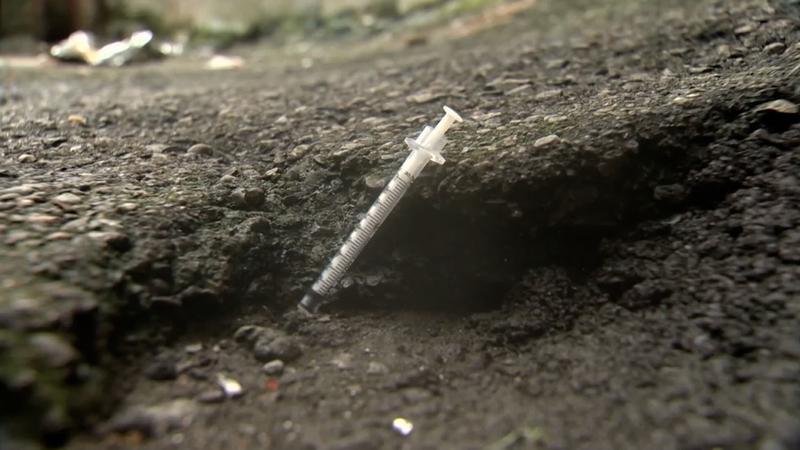
While the province saw a 13% decline in toxic drug poisoning deaths, Prince George unfortunately set a record high with 110 deaths in 2024
Drug Crisis

Prince George hits record high of toxic drug deaths in 2024

Feb 5, 2025 | 5:18 PM

PRINCE GEORGE – The B.C. Coroners Service says 2,253 people died in the province due to unregulated toxic drug poisoning in 2024, a 13% decline compared to 2023. However, Prince George made the wrong type of history, as it set a new record high with 110 deaths, up from 2023’s 92.

“Those are our loved ones. People who we cared for. The grief that this is caused is unimaginable. Over 70% of the people who are passing away are men who are housed, and we have an increase of 50% in women,” said Michelle Miller with Moms Stop the Harm.

“People are using behind closed doors. They’re not talking about their addictions. They’re not being supported and we need more supports out there,” Miller added.

Why is Prince George seeing an increase in drug poisoning deaths while B.C., and many other provinces, are seeing declines? Dr. Alexis Crabtree, Public Health Physician with the BC Centre for Disease Control (BCCDC) says it’s difficult to pinpoint any specific reason, but points to several factors that could be influencing the significant rise in lives lost. Among them are:

  • Difficulty accessing services. “It’s really important to acknowledge that there are real barriers to being able to access, to offer, services in rural and remote communities and in the north in general. There needs to continue to be strong efforts to serve people who use substances in the north,” Crabtree said.
  • Prince George possibly being a bigger drug market due to its nature as a hub city for northern B.C. “We also know that there’s differences in drug markets around the province. I’m not a policing expert, but certainly we sometimes see different trends, and it seems potentially related to different markets and different things that are happening with the sale of unregulated drugs in those places,” Crabtree said.
  • “We also know that Indigenous people face barriers to receiving the culturally safe care that they deserve. So if we’re seeing an effect of health care services on that overall trend of a decrease in decline in deaths around the province, it’s really important that the health care system keep working to make sure that health care is safe and accessible for everyone,” Crabtree said.
  • Possible random fluctuations due to Prince George being a smaller city.

Crabtree says the province should continue to develop health care and treatment services to help address the crisis, and while this is certainly needed and would be a big help, Miller adds it takes a lot more than just government intervention to get to the root of the issue. She highlights the importance of local community action, and taking the steps you can to prevent those around you from being potential victims.

“We need to have the one minute chats with our kids, with our loved ones often. It’s really important that we get educated and have seminars in Prince George so people can support people who are using substances,” Miller said.

“We need to keep this local. We need to support people in Prince George. We have the highest death rate per capita, and we need to acknowledge that, and we need to have plans,” she continued.

Some stats that could possibly lead to optimism include the fact that there was a 29% decrease in deaths from drug poisoning for people under 18 years old, meaning less young people are using drugs. Crabtree says the 13% provincial decline could possibly also indicate less drugs being made and on the streets, leading to less usage. However, another grim possibility is that so many drug users have died in recent years, thus leading to less drug users and less deaths.

“It’s also worth acknowledging the scale of deaths we’ve seen itself might be a contributing factor,” Crabtree said.

As for Miller, she believes the crisis in Prince George will only get worse in the coming months. While things like the federal government’s $1.3 billion border security plan could help, Miller believes this doesn’t address other key things, or that it will prevent drugs from crossing our border.

“I believe the cartels, transnational criminals, will find ways. They always have. This has been going on for centuries,” she said.

What could help in lowering the amount of drug poisoning deaths? There is no one answer, as it will take many different factors working together, but Miller believes prohibition on drugs is not the way to go.

“Prohibition on drugs is not the answer. We’ve learned that through history. What that has caused is more isolation for people, and to go out and find drugs off the streets. We have safer supply in Prince George at the needle exchange and, we have drug testing at Pounds,” Miller said.

On the topic of community involvement, she adds there is free naloxone training at the Prince George Public Library once a month, and adds she would like to see seminars in the city to further raise awareness on the issue, as well as ways to address the crisis.

Local news. Delivered. Free. Subscribe to our daily news wrap and get our top local stories delivered to your inbox every evening.