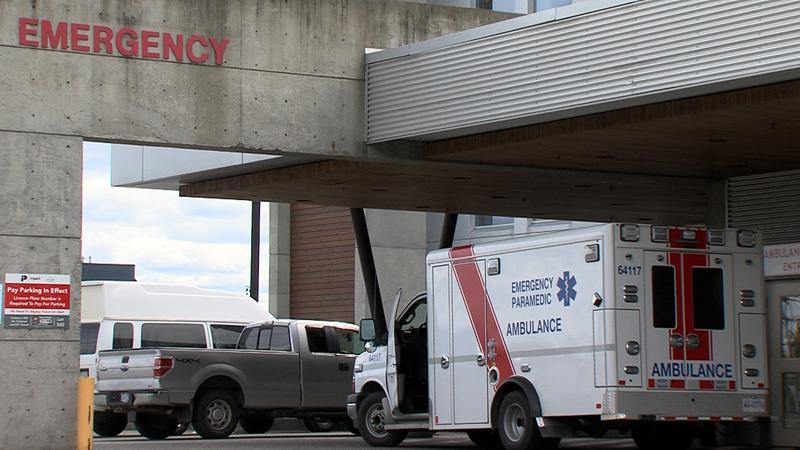
Concerns are being raised over worsening mental health for paramedics across the province
Paramedic crisis

Paramedics sound the alarm over serious health concerns

Aug 8, 2025 | 5:08 PM

PRINCE GEORGE – Paramedics across B.C. are sounding the alarm over serious concerns surrounding mental health.

“We’ve had four members die by suicide this year, and that is a very big escalation in numbers for us, especially since we’re only at the halfway point of the year. So we’re very concerned, our members are hurting, our profession is under fire on a lot of levels for different things,” said the Ambulance Paramedics of BC Communications Director Ian Tait.

“We’re now seeing 30% of our members are either off work with a mental health injury or at work while still receiving treatment,” he continued.

Tait says snowballing issues like covid, the opioid crisis, overworking while being understaffed, and more, have led to a breaking point for many paramedics who can’t keep up with increasing demands and fewer staff to handle them.

“If we don’t get better at treating this type of stuff, this is going to affect ambulance response times for when everybody’s family needs an ambulance, so we don’t want to let the first responders lag because eventually that’ll start to erode a lot of community support,” Tait said.

It’s an issue the province’s Opposition Critic for Mental Health and Addictions Claire Rattée has kept a close eye on, and she, like Tait, says it needs to be handled immediately.

“We’ve already seen how this has played out within medical services. When you’re looking at nurses and doctors and the burnout that has been experienced there, we can’t afford to wait to act on this issue,” she said.

“We need to start listening to people that are working on the front lines. We need to understand the challenges that they are facing and what they see as being the solutions. People that work in this field every day are going to know how to solve this problem better than you or me,” she continued.

Rattée says she’s been in discussions with the paramedics and the provincial government, and hopes to have a meeting where the government can listen to what the paramedics say needs to be done, as she says they would know better than anyone how to address the crisis. With that in mind, what does Tait think needs to happen?

“We’re really trying to reduce the stigma around mental health. There’s been lots of different campaigns trying to bring that into our culture as something that’s safe and inclusive. And then also just make sure that there’s no gaps in accessing care when people put their hand up and want to come forward. We don’t want there to be a five week delay to see a psychologist,” Tait said.

Reducing the stigma is important, as it can open up more discussions around resources that are available, but it also comes down to simply needing more people, resources, and better retention.

“We’re realizing that people can’t do this for 30 years anymore and just push it down. We need to confront this and support people throughout their career, and that’s another big part of our mission is to destigmatize this so that when people are okay in year one, or year five, or year ten, that it’s because of these supports,” Tait said.

While there is a lot that needs to be done, Tait was happy to report success in working with the province in adding more full time positions and more investment in resources, although the issue of understaffing, on top of the mental health challenges, remains.

Local news. Delivered. Free. Subscribe to our daily news wrap and get our top local stories delivered to your inbox every evening.