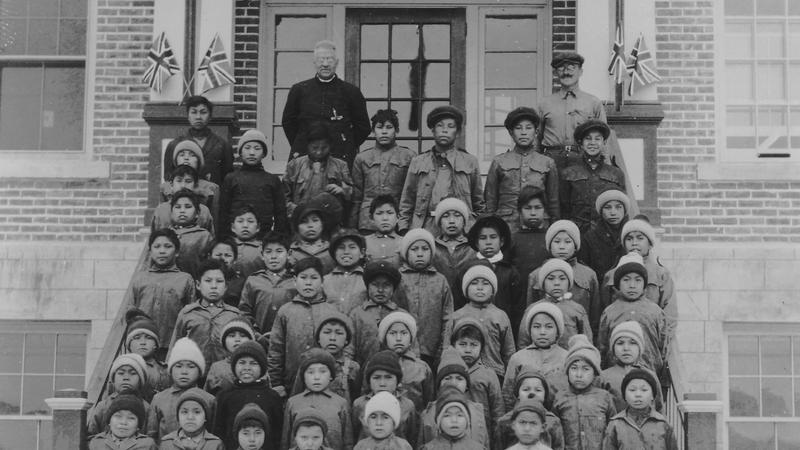
A photo of Indigenous Children outside of the Lejac Indian Residential School
Truth and Reconciliation

Nadleh Whut’en to honour residential school survivors

Sep 29, 2025 | 4:58 PM

NADLEH WHUT’EN – The fifth annual Truth and Reconciliation is coming up on September 30, and to mark the day the Nadleh Whut’en First Nation will be hosting events at the site of the former Lejac Indian Residential School. Taking place from 8:45 a.m. to 3:00 p.m., the day will commemorate the history of Lejac and the pain Indigenous people went through in the residential school.

“Nadleh has the important responsibility of stewarding the grounds where Lejac once stood. Decades after it was torn down, it still casts a long shadow on our community, and on the more than 70 communities who were forced to send their children to it. These events are important for survivors and intergenerational survivors to come together and be seen, heard, and supported,” said Chief Beverly Ketlo of Nadleh Whut’en.
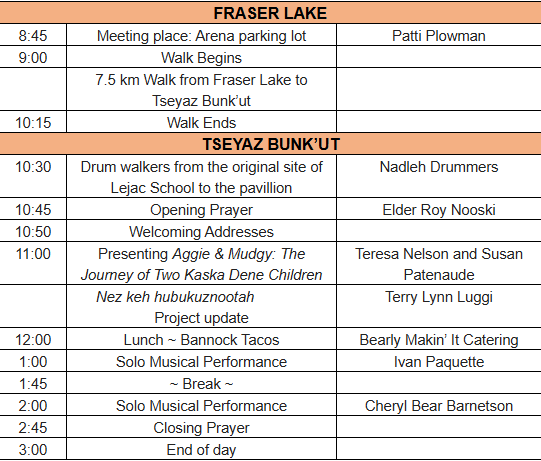
The full day schedule.

It’s a day of great difficulty for many survivors and the Indigenous community, but also a day of great importance to further the goals of Truth and Reconciliation.

“I think people can do a lot of work, a lot of personal development, a lot of wellness and a lot of healing. But those stories never go away, they never go away, people never forget. People never forget their families that were lost, their families that never came home, the families that have no idea where they are, they were never told where they are. So people never forget,” said Terry Luggi, a residential school survivor and Indian Residential School Project Manager for the Lejac Indian Residential School.

While discussions surrounding residential schools are incredibly difficulty for survivors like Luggi, she says it’s also key to furthering Truth and Reconciliation. Regarding truth, she says events like this help combat disinformation and denialism, as continuing to discuss what happened in these schools and the pain it caused ensures people remember what happened. As for reconciliation, Luggi believes this is dependent on the person, as each individual can be case-by-case, so it’s about finding what reconciliation means to you.

“I think the biggest thing is changing people’s hearts, changing people’s values and beliefs and long standing approaches,” Luggi said.

A big part of this for Luggi is also combating negative stereotypes.

“A lot of our communities are thriving. There’s still a lot of work to do around reconciliation, or whatever that might mean, but our people are moving forward and we want everybody to come with us, alongside us, beside us,” she said.

If you are an Indian Residential School survivor or have been affected by the residential school system and need help, you can contact the 24-hour Indian Residential Schools Crisis Line: 1-866-925-4419

Local news. Delivered. Free. Subscribe to our daily news wrap and get our top local stories delivered to your inbox every evening.