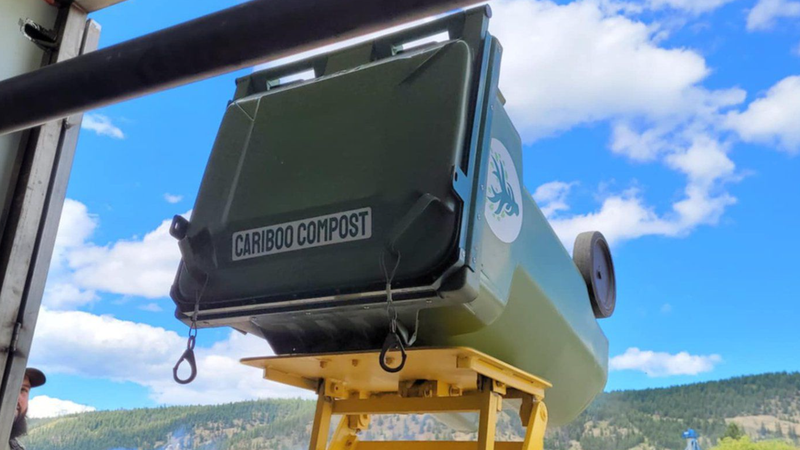
Four Cariboo transfer stations are now accepting organic waste which will be turned into nutrient-rich compost with the CRD's new Earth Flow composter. Submitted photo

New food scrap bins at transfer stations expands composting in Cariboo

Oct 12, 2025 | 1:05 PM

WILLIAMS LAKE — The Cariboo Regional District (CRD) is encouraging residents to turn their food scraps into soil by dropping them off at four transfer stations with recently installed food scrap bins.

Located at the Central Cariboo Transfer Station in Williams Lake as well as the transfer station in 150 Mile, Wildwood and Frost Creek, waste from the scrap bins will be turned into nutrient-rich compost by the CRD’s new in-vessel Earth Flow composter.

“It’s a level up from your backyard compost,” said Oliver Berger of Cariboo Compost who is contracted by the CRD to operate the Earth Flow. “Throwing your organics in the garbage is just a waste…the whole goal of this is to feed the soil and not the landfill.”

Berger said soil made from organics is more resilient to pests, absorbs more water and grows healthier food.

“About 30 per cent of municipal solid waste in the Cariboo is made up of compostable organics,” said Tera Grady, manager of solid waste for the CRD. The district’s ten-year Solid Waste Management Plan (SWMP), approved by the Ministry of Environment and Parks in March of 2025, also notes that over 70 per cent of what is sent to the landfill could be recycled or composted.

The new 40-foot Earth Flow allows the Cariboo to divert that waste from the landfill by mechanically mixing food waste with carbon sources and creating a finished compost product, Grady said. The SWMP says diverting food scraps also avoids methane production which, according to the United Nations Environment Program, is a potent greenhouse gas emission contributing to one million premature deaths each year.

Cariboo Compost has been producing compost on a farm north of Williams Lake for a few years now. Their work led to the production of a soil amendment which has been used to grow food locally. Cariboo Compost also offers household and business compost pick up at a fee.

Handouts are available at each location to help users know what can and can’t go in the composter. The Earth Flow can process most forms of organic waste, including fruit, vegetables, meats, bones (no carcasses), dairy, bread, apples, egg shells, coffee grounds, filters, bread, cereals, rice, pasta, wooden utensils and chopsticks, flower bouquets, small plants, small amount of salad dressings and paper towels and napkins used in the kitchen.

The Earth Flow does not accept yard waste, fats, oils, grease, pet waste nor plastics, including apple stickers and plastics labelled as biodegradable or compostable.

The SWMP has a long term vision of waste reduction and sustainable waste management. It explores avenues through which composting can be better supported in the Cariboo, but as the population isn’t big enough to support a large, industrial facility, the Earth Flow was instead installed. The plan also aims to increase community composting education, support food rescue donation programs, commercial to farm animal feed partnerships and more.

Learn more about the CRD’s new composting program on the district’s website cariboord.ca/en/home-and-property/ccts-composting.aspx.