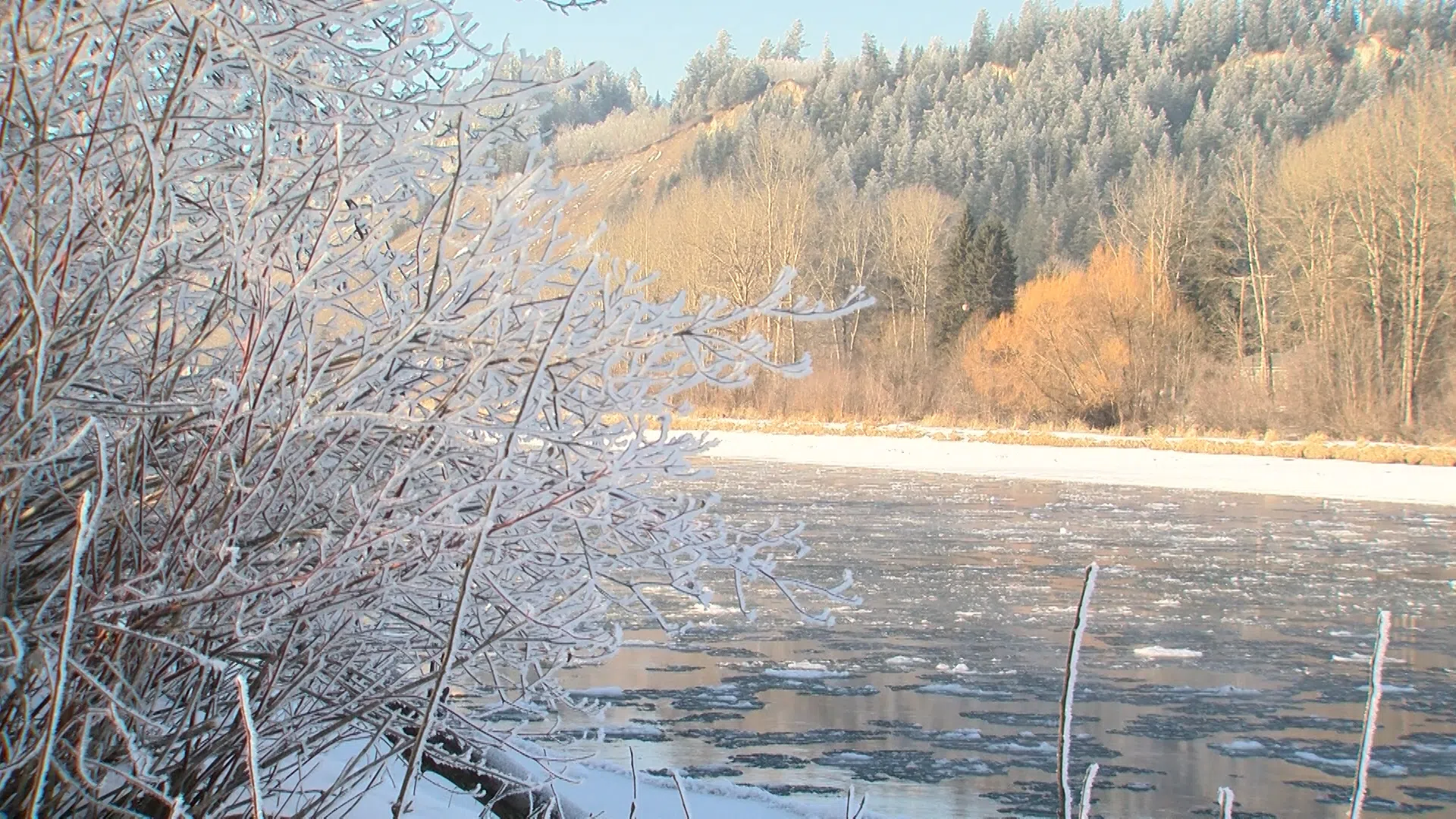
Even though it's chilly in Prince George, global temperatures are expected to continue rising, which could have significant impacts for our region.
Rising temperatures

Don’t let this week’s frost fool you, 2026 could be historically warm

Jan 23, 2026 | 4:16 PM


PRINCE GEORGE — Even though this past week in Prince George was frosty and chilly, 2026 is projected to be anything but. The Government of Canada released its annual global mean temperature forecast, and it predicts 2026 could be among the hottest years on record.

“There is a >99% chance (virtually certain) that 2026 will be hotter than every year on record prior to 2023 though only a 1% chance that it will break 2024’s record high temperature of 1.55 °C. 2026 is also set to be the 13th consecutive year in which temperatures reach at least 1.0 °C above pre-industrial levels, with a 12% chance of exceeding the 1.5 °C  Paris Agreement target,” the government report says.

What does that mean for us? University of Northern British Columbia (UNBC) Environmental Science Professor Dr. Stephen Déry warns the consequences of continual high temperatures could have global and local impacts both.

“Obviously we can think about the low snow cover we’re experiencing right now in Prince George, so perhaps we’ll have an early spring melt. Glaciers are receding in response to warmer temperatures, and essentially everything snow and ice are diminishing across the country and globally, so that is a concern. All of that glacier ice, for instance, is now contributing to sea level rise,” Déry said.

“We can think about extremes as well, and certainly with warmer temperatures we can expect heatwaves perhaps, and of course that can generate some drought possibly, some wildfire activity, so that’s a global concern as well. And the other extreme, of course, is that we can have floods and heavier precipitation,” he continued.

Locally, wildfires are the biggest concern, as a quick snow melt and lack of precipitation could lead to drier conditions, leading to a more challenging wildfire season. However, the impacts could stretch beyond just that.

“Agriculture may be impacted, and we might again see diminishing water resources during the summer. With heatwaves we can think that evaporation is going to increase and dry out the soil,” Déry said.

In a statement, the federal government calls climate change “one of the defining challenges of our time,” and says it is taking many steps to help mitigate the impacts. Among them is investing in clean energy projects to both support the environment and jobs.

“Through our policies and measures, as well as major clean energy and transmission projects such as the North Coast Transmission Line and the Iqaluit Nukkiksautiit hydroelectric project, more than $116 billion is being invested to create tens of thousands of jobs, reduce emissions, and revitalize communities across the country all while building a low-carbon economy,” said Keean Nembhard, Press Secretary of the Office of the Minister of the Environment, Climate Change, and Nature.

Nembhard’s statement continued, saying the industrial carbon pricing system is expected to reduce emissions by 53 to 90 Mt (Metric Tonnes) annually by 2030, on top of finalizing the enhanced methane regulations for the oil and gas sector and landfills, which he says will result in 100 Mt of emissions reductions from 2026-2040. While these moves could help mitigate climate impacts, Déry says it will likely be some time before we see the results.

“Maybe by the 2050s we’ll see carbon dioxide emissions and the concentration of that gas in the atmosphere start to diminish, and at that point perhaps global air temperatures will continue to diminish instead of increasing. But those are challenging targets to meet,” he said.

“We have to adapt to climate change. Obviously this is not going away. Do we have to build further reservoirs to maintain water levels?” he continued.

The government report adds Canada is warming at more than twice the global rate, with northern regions warming about three times as quickly.