
(Image Credit: BC Hydro)
First Nations Consent

Nechako First Nations calling for ‘immediate, consistent action’ on major projects

Jan 25, 2026 | 4:33 PM

PRINCE GEORGE — The Nechako First Nations are calling for immediate and consistent action from the Federal Government as a way to achieve consent-based partnerships on major projects.

In a statement, the governments of Stellat’en, Nadleh Whut’en, Saik’uz, and Lheidli T’enneh First Nations say major projects can achieve First Nations consent when governments and proponents engage early, respect Indigenous laws, and enter into genuine and enforceable partnerships.

They note if these conditions are absent or delayed, “consent will not be attained.”

“Reconciliation requires action, not rhetoric. Consent-based partnerships protect our lands and waters while creating real wealth for our people,” Chief Dolleen Logan of the Lheidli T’enneh Nation said in a statement.

Canada and British Columbia can get this right—but consistency and follow-through are required now.” 

The Nechako First Nations say multiple major projects affect its territories, including the North Coast Transmission Line, the Baptiste Nickel Project, Rio Tinto operations, New Gold, and the Coastal GasLink pipeline.

“The Nechako First Nations are also advancing renewable energy initiatives and have been clear that equity ownership, Indigenous-led assessment, and shared decision-making are now minimum requirements for consent-based development,” the statement added.

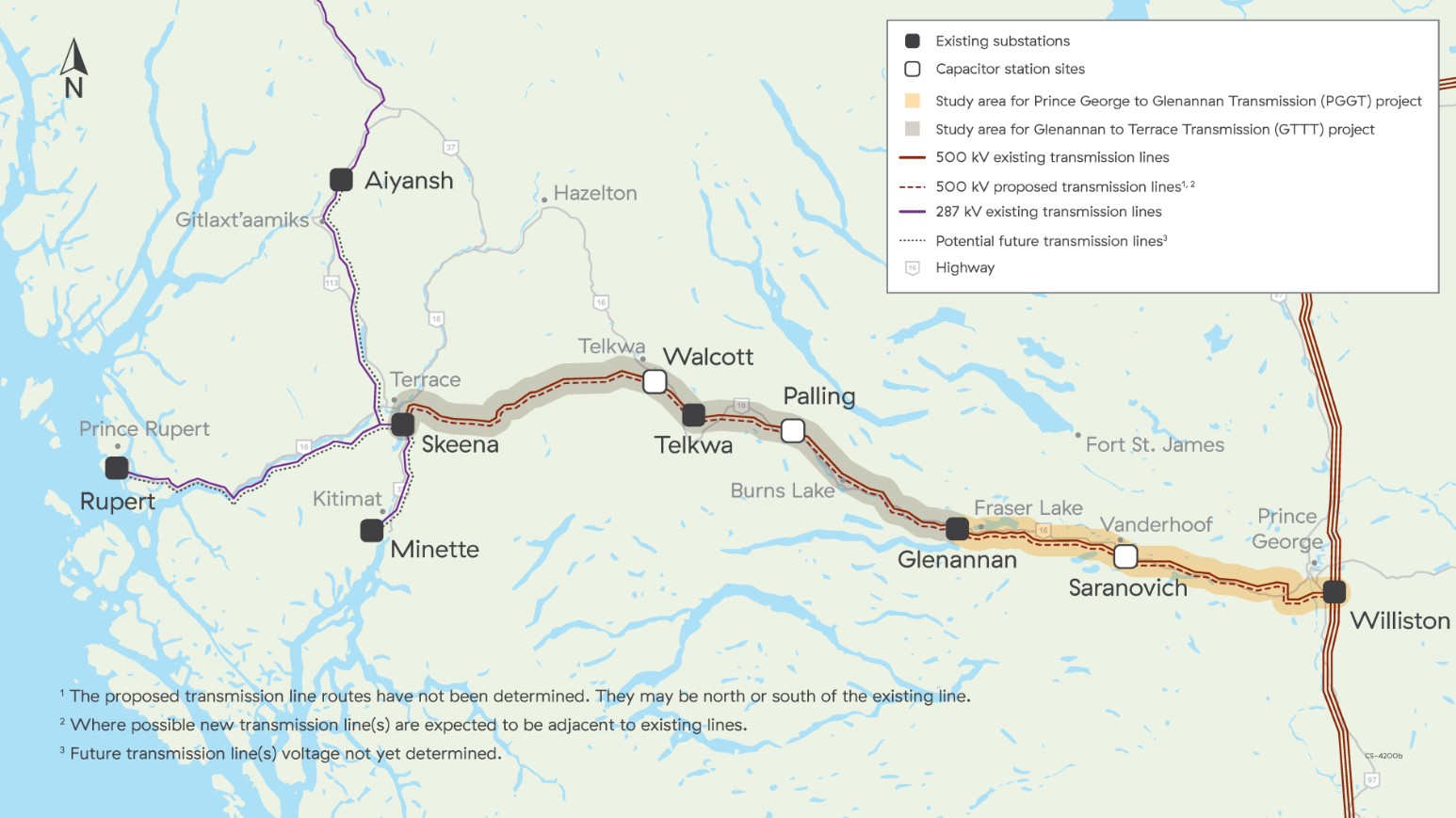
The proposed North Coast Transmission Line
The proposed North Coast Transmission Line (Image Credit: BC Energy Regulator)

First Nations leadership, provincial and federal officials, as well as industry representatives met in Prince George at the recently concluded Natural Resources Forum, where Indigenous participation in major projects was among the topics of discussion.

In calling the North Coast Transmission Line a “strategically important project,” the Nechako First Nations said consent “is achievable” if the federal and provincial governments “act consistently with their constitutional obligations, Indigenous law, and prior commitments to partnership and reconciliation.”

They also noted that future rail, energy, and infrastructure corridors crossing Nechako territories will require consent based on “Indigenous law, Indigenous-led review, equitable economic participation, and enforceable commitments to protect lands, waters, and future generations.”

“We are not opposed to development. Consent is required, and it must be achieved properly,” added Chief Robert Michell of the Stellat’en First Nation. “We are investing in our own projects and expect governments to meet us as partners, not obstacles.”

Canada speaks internationally about sovereignty, consistency, and shared responsibility. Those principles must apply in our territories,” added Chief Beverly Ketlo of the Nadleh Whut’en First Nation. “Consent is not a delay tactic – it is the decision-making standard.”

“Partnership works when First Nations are respected as governments with authority.”