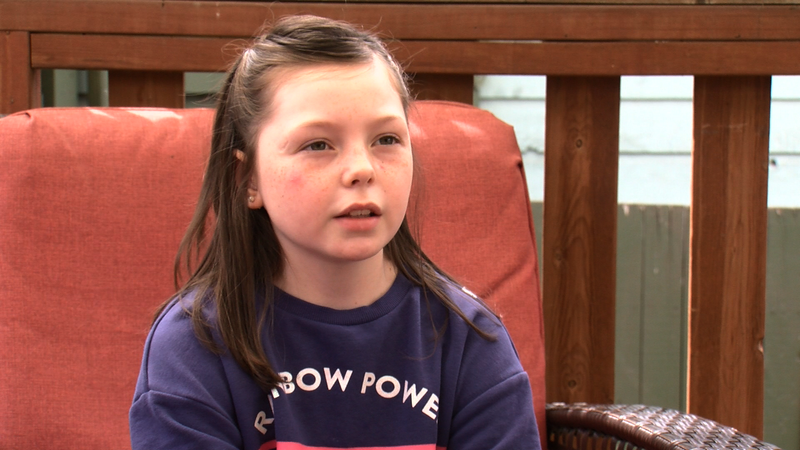
Young PG girl spots grandmother’s stroke
PRINCE GEORGE – F-A-S-T.
It’s the acronym used in recognizing the signs and symptoms of a stroke.
Face – is it drooping?
Arms – can you raise both?
PRINCE GEORGE – F-A-S-T.
It’s the acronym used in recognizing the signs and symptoms of a stroke.
Face – is it drooping?
Arms – can you raise both?
Speech – is it slurred or jumbled?

Time – to call 9-1-1 or your local emergency number, right away.
It’s something Emily Coyle learned earlier this year during her school’s Jump Rope for Heart put on by the Heart and Stroke Foundation, but little did she know she would need to put it into practice so quickly.
“The first thing that actually happened was her face, and it just drooped down, and then her arms,” explained Emily. “I had to go get my grandpa because she was having a stroke.”
On a Saturday in early January, Emily and her two-year-old sister were spending the weekend at their grandparents. Emily’s parents, Marie and Tyler, were out celebrating Marie’s birthday.
As Emily and her Grandma, Wendy, were setting up the game Horse Race on the kitchen table, Emily noticed that her 60-year-old grandmother was fumbling the cards she was attempting to shuffle.
“Emily, I’m fine. Don’t worry,” said Wendy. But the words didn’t come out right.
Emily noticed her grandmother’s slurred speech. Suddenly, Wendy’s arm flopped to her side as well.
“I was really scared but I thought in my head that I have to be brave because these things happen and you just have to be brave and have to do what you can.”
Despite the fear of the moment, Emily stayed calm and returned to the kitchen. “Smile really big for me!” she instructed her grandma. Wendy could only move her mouth on the left side. The young girl then asked her to raise both of her arms and say “The early bird catches the worm.” She could do neither.
Emily’s grandfather had her call 9-1-1 as he mended to his 60-year-old wife, something she too showed the composure in doing.
Emily’s dad Tyler says she did everything a parent would hope their child would do in a situation like that.
“It wasn’t until after when paramedics came and they were taking mom to the hospital where she finally broke down, but while it was all going on she remembered all of the FAST stuff she learned at Jump Rope for Heart.”
Wendy endured a series of testing in order to track down what may have caused her stroke.
“It ended up being a TIA (transient ischemic attack), or a mini-stroke they call it. They ended up finding a small aneurysm doing these scans. I did hear that it could have been there her whole life, they don’t really know, but we did find it and it does need to be taken care of now.”
A TIA is caused by a small blood clot or plaque in the arteries, however, it can be resolved quickly but can also be a precursor to a larger stroke.
Wendy is now back home as she awaits her procedure in Vancouver, which has been delayed due to COVID-19. The hospital stopped doing non-emergency surgeries in March. Earlier this month, Wendy was confident of having the operation soon.
Without a doubt, however, it was a blessing in disguise that Emily was there with the knowledge she learned from Heart and Stroke merely one week prior.
“It doesn’t matter what kind of stroke it is, it’s real. You’ve got to pay attention,” she says. “A stroke can happen to anybody at any time.”
