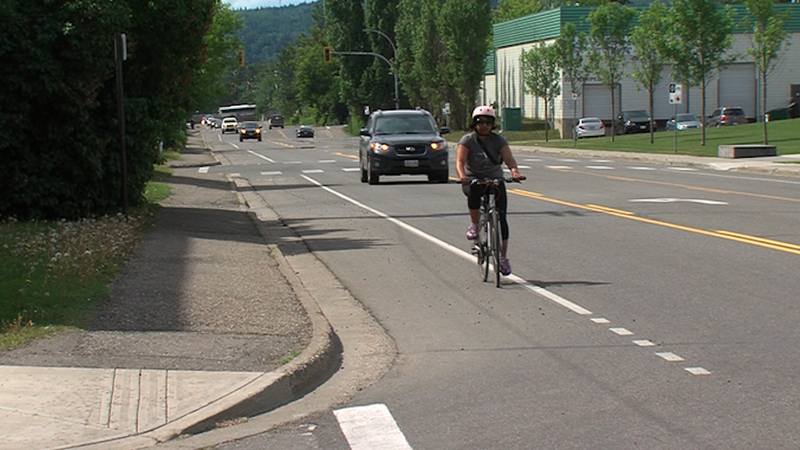
CKPG News File Image.
more walk and bike friendly
Northern B.C. communities to receive $1.8 million in pedestrian and cyclist infrastructure funding
Jun 24, 2020 | 12:36 PM
-
Share on Facebook
-
Share on Bluesky
-
Share on X
- Copy Link
HARTLEY BAY—The Province announced that several communities across northern B.C. will receive grant money to create new, and improve old pedestrian and cycling infrastructures.
More than $1.8 million in Active Transportation Grants have been awarded to the following six communities:
- $435,000 – Burns Lake and the Lake Babine First Nation for a sidewalk improvement project that will connect the Lake Babine Nation to the local hospital, seniors’ care facilities, medical clinics and other community facilities;
- $413,000 – Fort St. John for three multi-use pathways that will improve community connectivity;
- $433,866 – Gitga’at First Nation for the Txalgiu Destination Trail that will include amenities and water access for paddling transportation;
- $217,635 – Terrace for the Munroe St. Active Transportation Enhancements project;
- $328,226 – Vanderhoof for the Riverside Park multi-use path project that will connect to a community bus stop, seniors’ residence, tourist attractions, and downtown
The B.C. Active Transportation Infrastructure Grants program provides Indigenous governments, municipalities and regional districts with financial support to build new infrastructure and make improvements to existing networks. The program supports goals set out in the Province’s CleanBC plan, as well as Move. Commute. Connect. – B.C.’s strategy for cleaner, more active transportation.
