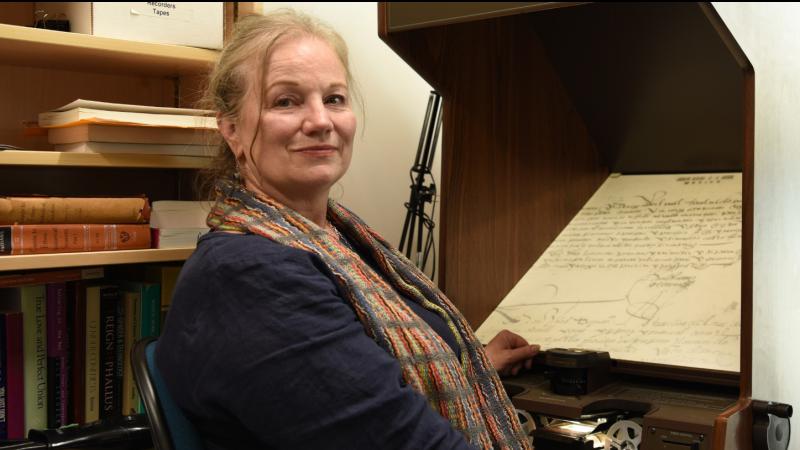
History Associate Professor Dr. Jacqueline Holler examines microfilm documents related to 16th-century sorcery cases. Researchers studying the history of medicine use documents involving witchcraft because some include information about contemporary healing practices. Photo Courtesy: UNBC
UNBC research grants
UNBC researchers receive more than $330,000 in grants
Jul 21, 2020 | 10:39 AM
-
Share on Facebook
-
Share on Bluesky
-
Share on X
- Copy Link
PRINCE GEORGE—Two UNBC faculty members are recipients of more than $330,000 in grants to help continue their research into medical history and the role local governments play in promoting entrepreneurs in rural and small-town communities.
History Associate Professor Dr. Jacqueline Holler and Geography Professor Dr. Greg Halseth are the recipients of the Social Sciences and Humanities Research Council Insight Grants.
“Support from the Social Sciences and Humanities Research Council facilitates the thorough investigations and originative explorations UNBC researchers engage in every day.”—Dr. Geoff Payne, UNBC Interim President
