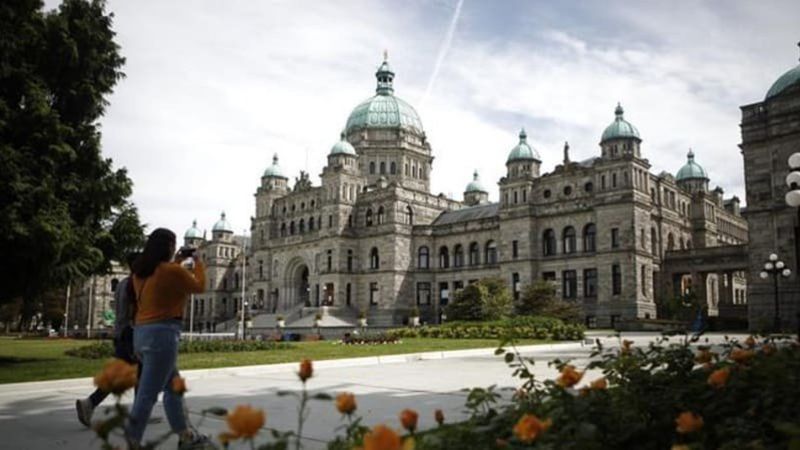
Photo Courtesy Canadian Press
Fringe Parties

Forcing the discussion: the role of BC’s ‘Fringe Parties’

Oct 11, 2020 | 2:40 PM

PRINCE GEORGE – Once upon a time, many may have considered the BC Green Party to be a ‘fringe party’.

“But they worked at it for many years and slowly gained some support. Today, they have three seats and they’re working hard to keep those,” explained Chris Beach, a Political Science instructor at the College of New Caledonia.

Beach says that while seats might be hard to come by for candidates from parties outside of the mainstream ones (New Democrats, Liberal, and Green), the main value for fringe party candidates is to provide a voice, a platform; a forum for people who feel their values and policies aren’t being represented by the mainstream parties.

“Elections aren’t just about winning. It’s about raising issues. A fringe party may provide an opportunity for someone to raise an issue that isn’t being raised by the mainstream parties in a certain riding for example,” says Beach.

However, when it comes to actually being elected in, it’s difficult.

“The established parties who form government, they make it difficult for other parties to break in. They’re in charge of the rules, they’re in charge of the government, they don’t want to change the political voting system. They stick with the system that benefits the status-quo, in which they are doing well. That’s why you don’t see changes in the electoral system in established countries such as the United States and Canada,” explains Beach.

In the 2017 BC Election, there were 1,973,914 votes cast. Of those, over 2 per cent went to candidates representing parties outside of the NDP, Liberal, and Green Party. Not included in that number were those running as independents, which drew in 1.06 per cent of the overall vote. Combined, just shy of 50,000 votes went to non-mainstream parties.

Ahead of the 24th election, British Columbians will have 23 registered parties to choose from. While each party may not be represented in each riding, it goes to show the varying opinions and values of people within the province.