A match made in Heaven

Dec 9, 2020 | 2:34 PM

PRINCE GEORGE – “Leave the best and take the rest.”
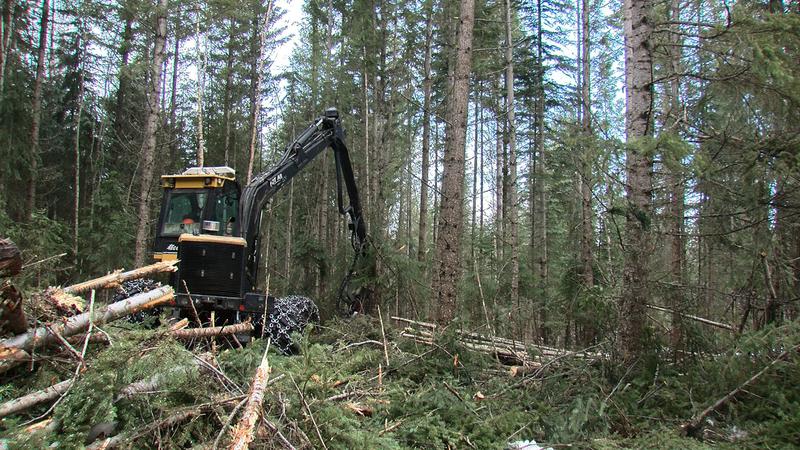
That’s how Liam Parfitt, Owner of Freya Logging describes commercial thinning. It’s a type of log harvesting practice that is commonplace in Europe.

“Basically it’s taking European forestry and bringing it to Canada,” explains Parfitt. “It’s exciting because it’s good forestry. Pacific Bioenergy has a strong need for junky wood. And without them, we can’t do this kind of logging.”

It involves harvesting what he calls “junk wood” from an existing forest, such as the deciduous trees and the stunted and unhealthy pine, spruce and Douglas fir.

It improves the chances for the larger stands to grow healthier and clears out the underbrush that clutters up the forest floor, leaving the food sources for deer, moose and other forest creatures. Traditional harvesting involves clearing everything off the land, taking the viable wood to the mills, piling the “junk” into slash piles and burning them.

Pacific Bioenergy is the perfect customer for the wood.

“Pacific Bioenergy uses in or around 800,000 cubic metres a year. As much as a pulp mill would use, but without access to a [timber harvesting] licence, getting that fibre is increasingly difficult, ” says Joe Kenny, Woodlands Manager for Pacific Bioenergy. ”

He says that is particularly true in this age of mill closures now that the Mountain Pine Beetle salvage is complete and the Annual Allowable Cut is dropping. No sawmills, no residuals. It means the perfect marriage. Freya Logging wants to practice sustainable logging and Pacific Bioenergy needs the wood.

And while it is a more intensive style of log harvesting, it may be a direction for the future with a demand for a greener industry.