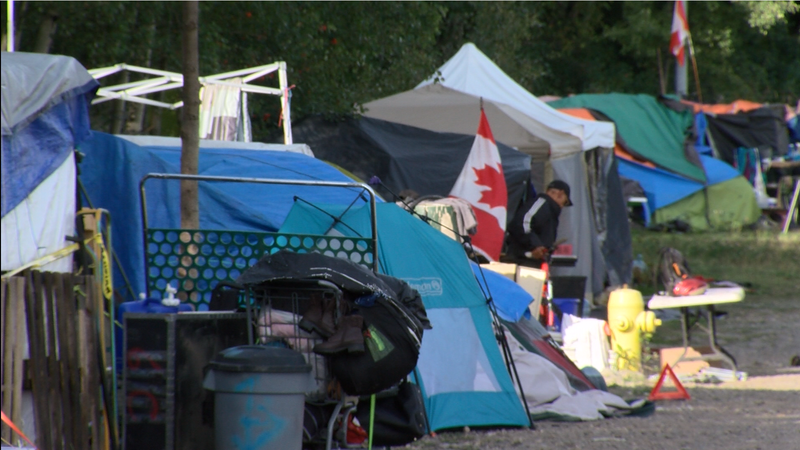
VACCINE MANDATE FOR UNHOUSED PEOPLE

Proof of vaccine mandate and its effects on unhoused people

Aug 30, 2021 | 5:00 PM

PRINCE GEORGE—The proof of vaccination mandate is set to be in place through January 31st, 2022, which worries advocates for those who are unhoused. Although shelters are considered essential, some activities or planned events could be considered non-essential.

“It just places more barriers, more roadblocks for them to access certain services,” said Connie Abe, Executive Director for AWAC.

The list of non-essential services includes places like restaurants, coffee shops, and gyms. All of which unhoused people access for basic needs. Among the list are indoor events, which leaves Abe wondering about what that means for associations like AWAC.

“We have to now start asking those questions. If we wanted to host an event or we want to create an opportunity for our individuals to gather, does that mean it’s not essential and so we’re going to have to ask them for their passports?” said Abe.

Each year, AWAC hosts a number of events such as their upcoming fall fair, which takes place outdoors, but she’s worried since people will be eating inside that it would be breaking the health order. if she can still host the event altogether.

“I can understand you know what this passport is suppose to accomplish but it doesn’t work for our population,” said Abe.

What they can do isn’t the only concern for the association and other advocacy groups. There’s also concerns about where their people can go.

In the wintertime, restaurants and coffee shops are a safe haven from below freezing temperatures. But, if shelters are full and they don’t have proof of vaccination, their options are limited.

“Just last week, we went out to eat at a local restaurant and I’ve seen a number of our individuals that we support here, having dinner which I thought was wonderful that they have the opportunity to go and have dinner. But then I started thinking ‘well now they won’t be able to do that right?’ If they’re outside and it’s minus 30 and they want to step into Tim Hortons to have a hot coffee, they’re not going to be able to do that,” said Abe.

Lost IDs, lack of education on vaccines, and access to getting the vaccine are just some roadblocks for unhoused people.

UNBC Professor Dawn Hemingway is worried that these barriers would only increase the workload to safely care for them.

“If we’re in a situation where someone is out in the cold, they’re trying to get in for a coffee or get in the coffee shop, we have to have some sense of responsibility. If they can’t go there, then we have to have other places for them to go,” said Hemingway.

Advocates say the next step now to prepare for this mandate, is providing better education and creating an easier avenue to get the vaccine.

“We have a lot of individuals who would like to get the vaccination, but they don’t work on the same time frame as most individuals do. So let’s create the opportunity for them, where it’s more beneficial for them, more easier for them to get the vaccination,” said Abe.