New research on cancer treatment “cutting edge”
-
Share on Facebook
-
Share on Bluesky
-
Share on X
- Copy Link
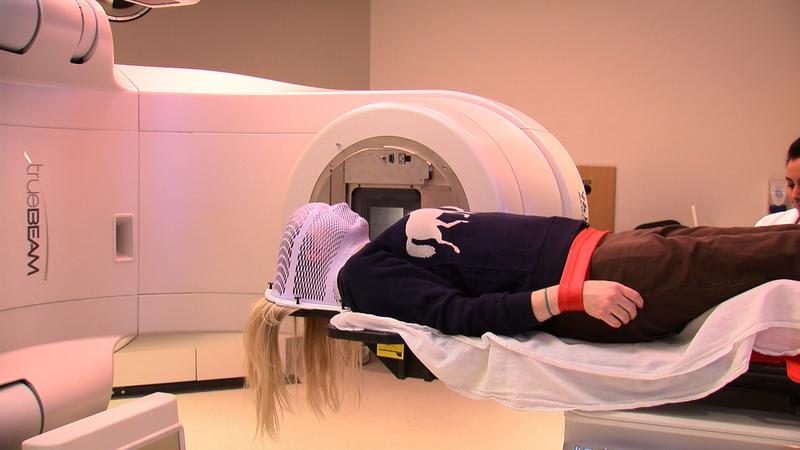
PRINCE GEORGE – The BC Cancer Centre for the North has some of the best technology there is for treating cancer, after opening its doors in 2012. But a major part of the work at the centre is research, something oncologist Dr. Rob Olson is heavily invested in. He is part of an international study on a different form of cancer treatment: high-precision therapy that delivers substantially higher doses of radiation to a tumour.
“It’s treating the lung lesions because the breast cancer has already been dealt with many years ago,” explains Dr. Olson. “So yeah, it’s treating the spread, and this specific trial, it’s called Saber Five. It’s a phase two trial, quite large, almost 400 patients. And the primary outcome was looking at side effects. And the reason we’re looking at side effects is that the study that came before it, which we were part of, actually had double the survival. So people live longer if they got saber great news but three times the side effects and so mild side effects happened 30% of the time serious side effects happened 15% of the time.”
Stereotactic ablative radiotherapy, or SABR, is cutting-edge therapy for radiation therapy. And Dr. Olson’s work is very specific involving a number of different techniques.
