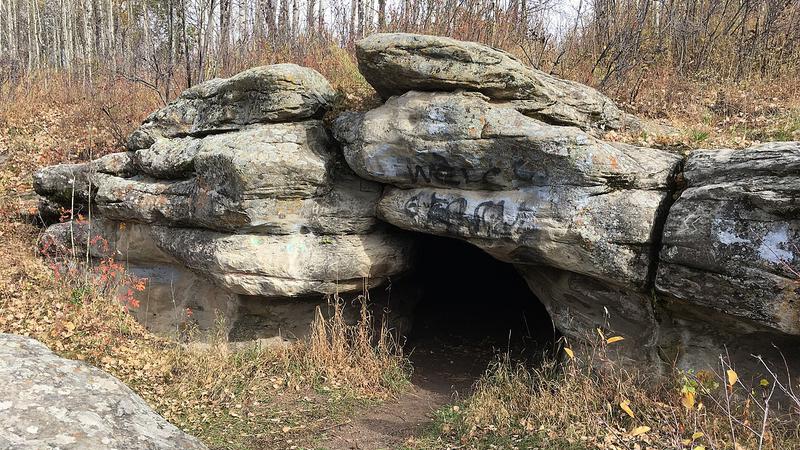
Image Credit: Wikimedia Commons
UNBC Archaeology

Archeology field schools to continue in 2026 at Tse’k’wa historic cave

Sep 1, 2025 | 12:00 PM

CHARLIE LAKE, B.C. — The road to a career in archeology at the University of Northern British Columbia (UNBC) will continue to run through Charlie Lake until at least 2026.

The Tse’k’wa Heritage Society, located in the area, announced a third field school to take place in the area of its cave during the Archeology Night Out on Wednesday, August 27th at Treaty 8 Tribal Association offices in Fort St. John.

A field school provides practical on-location instruction in archeological methods such as excavation, surveying and mapping.

Previously, the Tse’k’wa National Historic Site, a cave with roots tracing back to the Ice Age, has hosted field schools in 2022 and 2024.

The property is owned wholly by Doig River First Nation (DRFN), Prophet River First Nation (PRFN) and West Moberly First Nations (WMFN), who purchased the site 13 years ago in 2012.

Tse’k’wa Heritage Society executive director Alyssa Currie told Energeticcity.ca the news to bring back the field school was “pretty exciting,” as the society currently has a multi-year partnership with both UNBC and Simon Fraser University (SFU), which sent experts to do excavations at the site beginning in the 1970s.

“This will be the final field school on our current archeology permit,” said Currie. “Our permit will end at the end of 2026 and so this really is our last opportunity on this particular archeology permit to host a field school.

“We were really excited to connect with UNBC and confirm that we will be able to host one more.”

Attendees at the event, both in person and remote, got a glimpse of the future of Tse’k’wa. With photogrammetry plans in place from the 2024’s field school, artefacts unearthed by the field school are in the process of being put into an online catalogue, through collaboration with the Los Angeles-based The Arc/k Project.

“[They] specialize in doing photogrammetry work for cultural heritage sites and cultural heritage objects,” said Currie. “They have worked with cultural heritage organizations and First Nations all over the world to document and conserve and create educational material using photogrammetry.”

Those at the presentation included representatives from the society’s board, including president Garry Oker and lands department officials from WMFN, the Tse’k’wa cave volunteers and UNBC students.

UNBC’s Dr. Farid Rahemtulla, who co-hosted the event with Currie, led onlookers through the history of the school’s field archeology program, including collaborations with Indigenous communities in central B.C., the lower interior and the province’s coast.

UNBC began collaborating with Tse’k’wa in 2021, when Currie said the First Nations communities in the area “felt that it was important for them to be involved in modern day excavations that would make use of the latest technology and operate on a drastically different model.”

This came through collaborations with Rahemtulla and SFU’s Dr. Michael Richards in what was described as “passing the torch.”

“We reached out both to UNBC and SFU about passing the torch back to the community and how we could facilitate that,” said Currie. “We felt that the UNBC model, specifically Dr. Rahemtulla’s work directly with communities, was going to be the perfect fit for continuing the academic research here.”

Unique in its approach is the premise that community members can attend the field schools, receiving a full university credit upon successful completion of the course.

There was also a case showcasing a number of items, including spearheads, microblades and fragments from the previous field schools at Tse’k’wa.

The 2026 archeology field school at Tse’k’wa will take place from May 11th to June 22nd. For more information about Tse’k’wa, visit its website.