To Your Health: What to know before your next lake day

Aug 4, 2026 | 6:01 AM


To Your Health – If you’re planning to visit a lake this summer, take a good look at the water before you, your children, or your pets go in.

Dr. Juliette O’Keefe, a senior scientist at the National Collaborating Centre for Environmental Health, explains that blue-green algae is another name for a group of organisms called cyanobacteria.

“They’re a type of bacteria that live in both freshwater and saltwater,” O’Keefe said. She adds that they use sunlight to make their own energy.

O’Keefe says these organisms have been around for a long time. In freshwater, they can multiply quickly when the conditions are right.

“If the water is warm and there are enough nutrients, they can grow quickly and form blooms on lakes,” she said.

These blooms can be dangerous. O’Keefe says some types of cyanobacteria make toxins, and the kind of toxin depends on the species.

“Some of these are liver toxins, some are neurotoxins, and they can be harmful to people, animals, fish, and other mammals,” she said. Effects can reach the whole lake. O’Keefe says blooms can strip oxygen from the water as they break down. She says that can sometimes lead to a fish kill after a bloom. The greatest risk for people and pets is swallowing the water. O’Keefe says the most dangerous thing is drinking water that has been affected by a bloom. For pets, the results can be very serious.

“If you have a pet and you see a bloom and they drink the water, there’s a high chance your pet could have severe symptoms,” O’Keefe said. She says animals can have breathing or skin problems, and in some cases, they can die.

People can also get sick. O’Keefe says anyone exposed to the toxins might have different symptoms.

“These can include headaches, nausea, stomach cramps, and fever,” she said. People can also get a rash or have itchy skin and eyes. In very rare and serious cases, liver problems can happen.

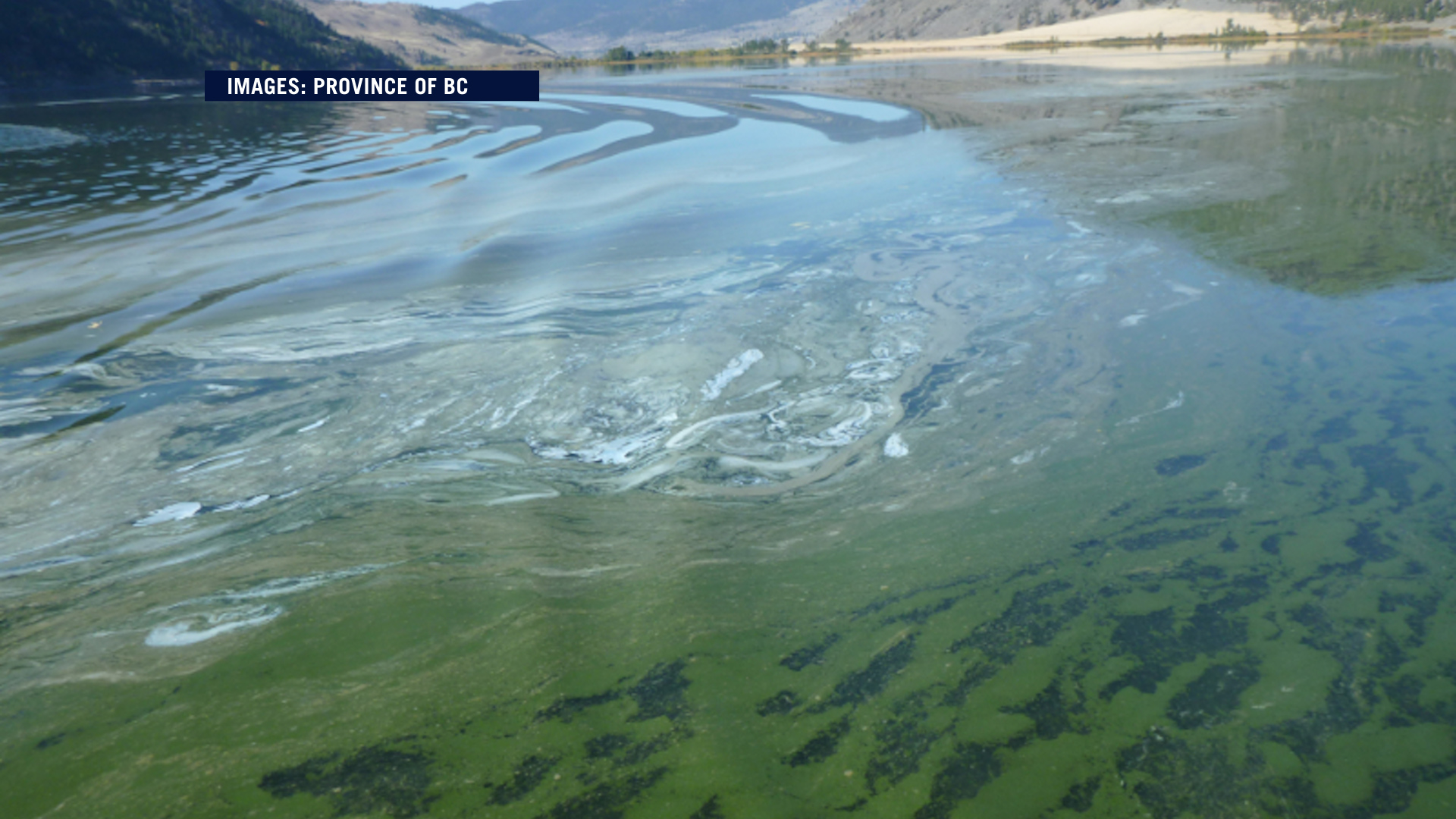
O’Keefe says it’s important to learn how to spot the signs. The algae is often a bluish-green colour.

“It might look like spilled paint on the surface of a lake. It could look like grass clippings,” she said. “It can clearly look like something that just doesn’t seem right.”

O’Keefe recommends the Algae Watch website as a helpful tool. It has photo examples to help people identify blooms in their local lakes. The site also lets people upload their own photos. O’Keefe says a scientist checks each photo and confirms if it looks like blue-green algae.

“You can also check other lakes in your area to see if anyone has reported anything recently,” she said. The site also gives tips on symptoms and how to keep people, pets, and livestock safe.

O’Keefe says the main goal is to raise awareness. These blooms can happen in lakes all over B.C. during the summer.

Her advice for anyone who is unsure about the water is straightforward.

“If you’re not sure, stay out of the water. Send a report and a picture to the watch website, and they will get back to you,” she said.