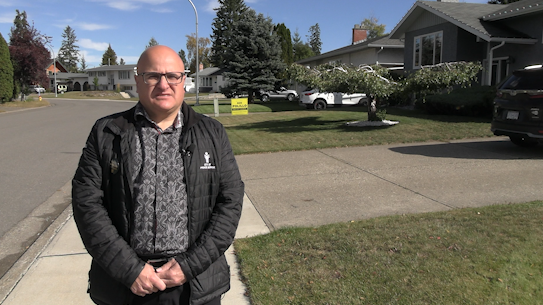
Council Candidate Ron Polillo
Civic Elections

Snap provincial election draws criticism from Municipal candidates

Sep 22, 2026 | 4:05 PM


PRINCE GEORGE – The decision by Premier David Eby to call a snap provincial election that will run concurrently with municipal elections across British Columbia is drawing sharp criticism from local candidates and former elected officials, who say the move threatens to overshadow important community issues and reduce voter engagement.

For Prince George city council candidate Ron Polillo, the announcement was both anticipated and disappointing.

Like many candidates across the province, Polillo spent part of his day listening to the premier’s announcement. While speculation had mounted that a provincial election call was imminent, he had hoped the government would heed requests from local government representatives and postpone the vote until after municipal elections concluded.

“I am discouraged and disheartened because we made it known loud and clear at UBCM and UBCM put out a press release urging the Premier to delay the election until after our election,” said Polillo. “And he didn’t listen to that.”

The concern stems from the challenge municipal candidates already face in reaching voters during crowded local races. Prince George voters are being asked to choose from a record nine mayoral candidates, 18 council candidates, 18 individuals seeking seats on the Regional District of Fraser-Fort George board, and 17 candidates running for school trustee positions in School District 57.

Adding a provincial campaign to the mix, critics argue, will make it even more difficult for voters to stay informed and for municipal candidates to communicate their messages.

Former Prince George MLA Pat Bell, who participated in several provincial election campaigns during his political career, said the current situation is exactly what fixed election dates were designed to avoid.

“We talked about a number of different things, but one of the things was making sure that we aligned them in a way where there was only either a municipal or a provincial election every second year,” Bell said. “By doing what he’s done today, he’s overlapped the municipal election.”

Bell believes local candidates now face an uphill battle competing for public attention against well-funded provincial parties and campaign organizations.

“All of the candidates that are coming out and trying to get their message out in Prince George and municipalities across the province are now going to be fighting against these large provincial machines,” he said.

The overlap could also place additional demands on voters already navigating a lengthy ballot and trying to understand the positions of dozens of candidates.

“You know, we all lead very busy, very active lives and asking people to do research on the nine mayoral candidates, the 18 running for council, 17 running for school trustee and the other candidates in provincial elections,” said Polillo. “That is a lot to ask from voters.”

For many municipal candidates, the concern is not simply one of competition for media attention. They fear important local issues could be pushed aside as provincial topics dominate headlines, political advertising and public discussion.

Municipal elections often focus on matters that have an immediate impact on residents’ daily lives, including infrastructure, public safety, housing development, recreation services, land use planning and taxation. Candidates worry those discussions could struggle to gain traction amid debates over provincial healthcare, education, resource development and affordability.

Bell said history suggests the overlap could also negatively affect participation in local elections.

“I feel for the candidates because I think we’ll see a much lower voter turnout in the municipal election,” he said. “People that would volunteer on campaigns are going to start thinking about the provincial election and volunteering on those campaigns. It’s going to be hard to get the message out.”

Volunteer support is a critical component of municipal campaigns, many of which operate with limited budgets and rely heavily on community members to canvass neighbourhoods, distribute campaign materials and help organize events.

Provincial parties, meanwhile, typically have larger campaign structures and more resources at their disposal. Bell believes that reality could draw volunteers away from local campaigns at a time when municipal candidates are trying to connect with voters before ballots are cast.

While some observers suggest a provincial election could increase political interest overall and potentially boost turnout, Polillo remains concerned that the sheer volume of information voters will need to process could have the opposite effect.

“This is not going to help. This will be a real threat to, I think, people being engaged, being informed and getting out to vote,” he said.

The challenge, according to Polillo, will be ensuring voters do not become overwhelmed by the number of candidates and issues competing for their attention.

This year’s municipal election already represents one of the most competitive local races in recent memory. The unprecedented number of candidates seeking elected office reflects strong public interest in shaping the future of Prince George and the surrounding region.

However, candidates worry that interest could be diluted if residents feel overloaded by simultaneous campaigns at two levels of government.

Despite his frustrations with the timing of the provincial election call, Polillo said he remains optimistic about voters’ commitment to democracy.

Ultimately, he believes residents will recognize the importance of participating in both elections and will continue to exercise their democratic rights.

While the campaign environment may now be more crowded and complicated, he said the responsibility rests with candidates and voters alike to remain engaged.

The coming weeks will determine whether fears of reduced participation prove justified. For now, municipal candidates across Prince George and British Columbia face the challenge of making their voices heard while sharing the political stage with a full-scale provincial campaign.