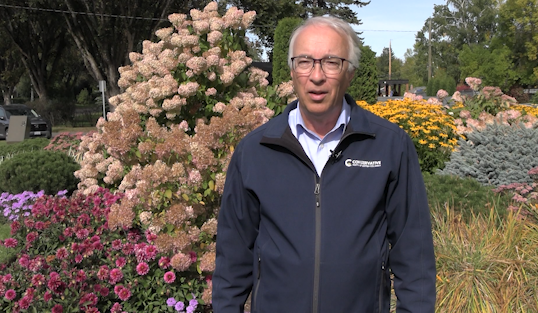
John Rustad
Provincial Politics

Rustad reflects on tumultuous political journey

Sep 25, 2026 | 3:20 PM


PRINCE GEORGE — Few political careers in British Columbia have taken as many sharp turns as that of John Rustad.

From school trustee during a period of widespread school closures, to BC Liberal cabinet minister, to political exile, and finally to leader of a resurgent Conservative movement that came within a few hundred votes of forming government, Rustad’s journey mirrors the dramatic shifts that have transformed provincial politics over the last two decades.

The story begins in 2002 at what is now the South Fort George Resource Centre.

At the time, the building housed an elementary school, one of 11 schools closed by School District 57 during a period of declining enrolment and difficult budget decisions. The closures sparked significant public debate and community concern across Prince George.

For Rustad, who had just begun his political career as a school trustee, the experience left a lasting impression.

“In 2002, we were in the middle of a whole bunch of school closures,” Rustad recalled. “You know, all that upheaval that was going on. It was a very tumultuous time.”

At the time, provincial politics were not at the forefront of his ambitions.

“I was not thinking about provincial politics, although I didn’t rule it out, obviously, but I had always wanted to do at least two terms of local politics as a school trustee,” he said. “And I didn’t get that chance, of course, because a riding opened up in 2005.”

That opportunity would propel Rustad onto the provincial stage.

In the 2005 election, he won the riding of Prince George-Omineca as a BC Liberal candidate. When electoral boundaries were later redrawn, he successfully transitioned to the newly created Nechako Lakes riding, winning re-election in 2009 and becoming a fixture in northern B.C. politics.

Yet Rustad says his original motivation for entering public life was rooted in education rather than broader provincial issues.

“My whole goal in politics actually was to try to fix our education sector, and I never got a chance to do that, unfortunately,” he said. “But that was one of the big objectives I had. I mean, there’s other things going on. That’s where I thought I could make the most influence in terms of how we could try to improve things provincially.”

Over the next several years, Rustad would serve in a variety of government roles, building a reputation as a strong advocate for northern and rural communities. But it was an event in 2022 that dramatically altered the trajectory of his career.

That August, Rustad was removed from the BC Liberal caucus, then known as BC United, after controversy surrounding his social media activity. The former minister had reposted content disputing the role of carbon dioxide emissions in climate change, sparking criticism from party leadership and environmental advocates.

The decision ended nearly two decades of association with the political organization that had defined much of his public life.

“Being kicked out of the party that I’d been part of for a long time was also obviously pretty tumultuous at the time,” Rustad said.

Despite the setback, he says he has never viewed the episode with regret.

“I didn’t really reflect back on it badly, and I still don’t.”

What followed would become one of the most remarkable political comebacks in recent provincial history.

After leaving the BC Liberals, Rustad joined the BC Conservative Party, a political organization that had spent years on the fringes of provincial politics and held no seats in the legislature.

Within months, he emerged as its leader.

In 2023, Rustad was acclaimed as leader of the party, inheriting an organization with limited membership and little political influence.

At the time, few observers predicted how rapidly the party’s fortunes would change.

The rise of the Conservatives also reflected a broader realignment on the province’s political right, according to former BC Liberal MLA Mike Morris, who served alongside Rustad during their years in government.

“We’ve gone through the metamorphosis of Social Credit to the B.C. Liberals, to the B.C. United Party, and now we see it morphing into the B.C. Conservatives,” Morris said. “The same people are involved in all of that.”

His comments point to a recurring theme in B.C. politics: while party names and banners may change, many of the individuals and political philosophies remain connected through successive generations of centre-right organizations.

That evolution accelerated in 2024.

With provincial election polls showing growing Conservative support and BC United struggling to gain traction, party leader Kevin Falcon made the extraordinary decision to suspend BC United’s campaign and throw support behind Rustad’s Conservatives.

The move effectively consolidated much of the province’s political right under a single banner.

Speaking following the announcement, Rustad described the merger as a collaborative process between the two organizations.

“And this will be a process that we have committed to working between the B.C. United Party with the Conservative Party,” he told reporters.

The arrangement represented a stunning reversal from just two years earlier, when Rustad had found himself outside the very political movement he had spent much of his career helping to build.

For Rustad, the growth of the Conservative Party remains one of the defining achievements of his political life.

When he became leader, the party’s prospects appeared modest at best.

“It had nobody elected at that point and had two per cent in the last poll,” he said. “We had 500 members and actually they had grown it to 800 members as a party.”

What followed was a period of rapid expansion.

“Today, of course, we were 395 votes short in the 2024 election from actually forming government. And now we’ve got about 45,000 members as a party.”

The transformation turned the Conservatives from a political afterthought into the Official Opposition and a major force in provincial politics.

Still, Rustad acknowledges the process was not easy.

“So it was certainly a labour of love building this thing, not without its controversy and turmoil.”

The comment could just as easily describe Rustad’s own political career.

From school closure debates in Prince George to leadership of a party on the brink of government, his path has been marked by uncertainty, upheaval and unexpected opportunities.

And as British Columbia’s political landscape continues to evolve, Rustad’s story serves as a reminder that political fortunes can change quickly.

For now, questions remain about how the province’s centre-right movement will continue to develop, where former BC United figures will ultimately land, and how a new generation of political leaders will shape the future.

What is certain is that the transformation that began with school board meetings in Prince George more than two decades ago is still unfolding today.