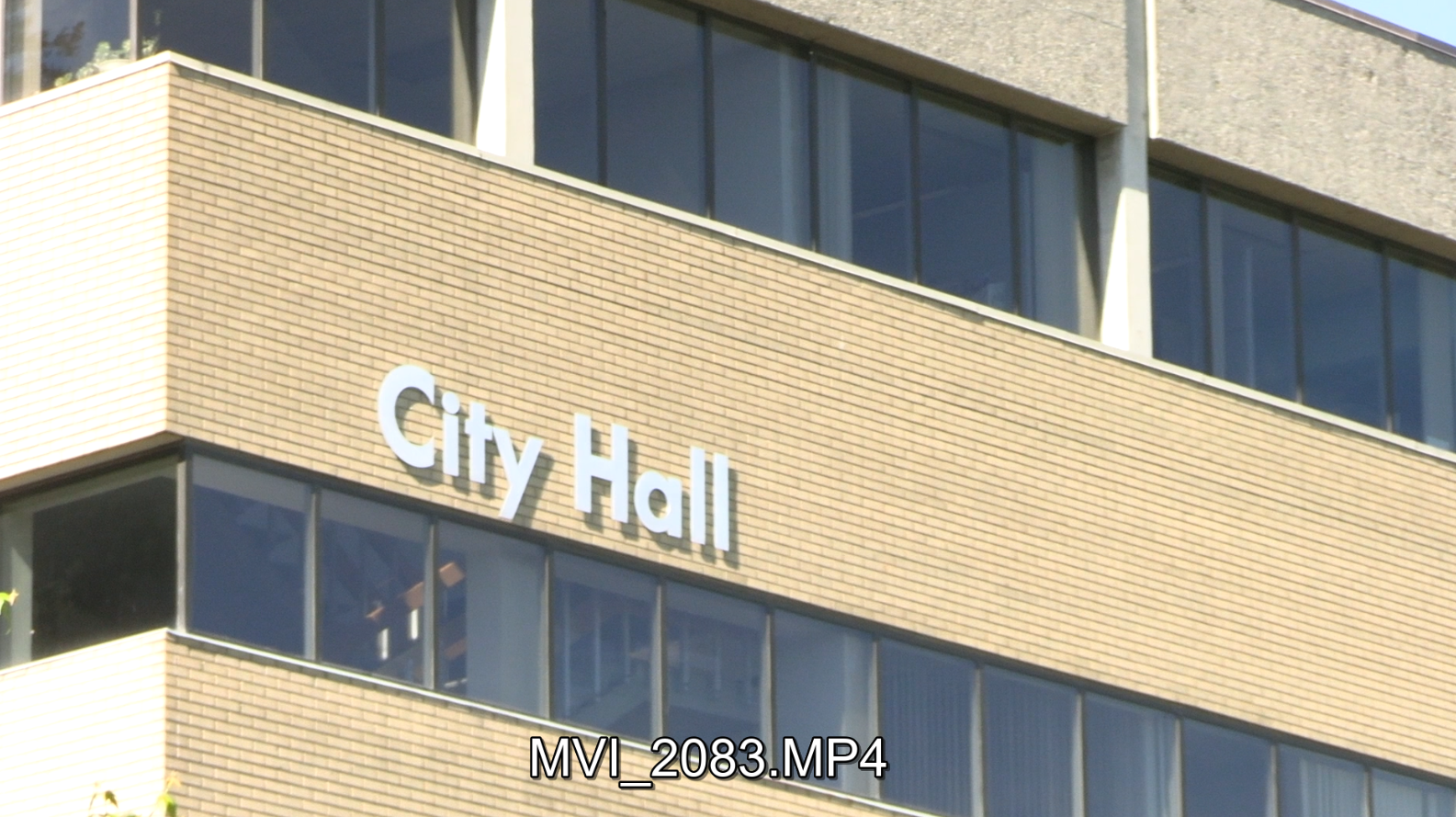
City Hall
City Council

Prince George faces nearly $900 Million in civic facility costs over next 20 years

Sep 29, 2026 | 3:58 PM


PRINCE GEORGE – The City of Prince George is staring down a massive infrastructure challenge, with a newly completed facilities master plan estimating nearly $900 million will be needed over the next two decades to maintain, renew, redevelop and replace dozens of city-owned buildings.

The report serves as a comprehensive assessment of 56 municipal facilities, ranging from City Hall and the Prince George Public Library to arenas, community centres, fire halls and cultural facilities. While city officials stress that most buildings remain in good condition today, the study highlights the growing costs associated with an aging civic infrastructure network.

“The city’s got a very sophisticated program called Builder, and that tracks all of our 56 buildings and the various components and talks about what’s in good shape, what’s in bad shape, and it tracks it over the years,” explained Andy Beesley, the City’s Director of Civic Facilities and Events.

The city hired engineering consulting firm AECOM to update its facilities master plan using information gathered from the Builder asset-management system, as well as inspections and feedback from city staff.

“So the AECOM, the company that has done the facilities master plan, has come in, looked at all that data, refreshed it all, got a whole bunch of more information from staff, and they’ve assessed all the buildings to look at what are they like today,” said Beesley.

“But more importantly, perhaps, what do they need in the future to keep them in good shape?”

The master plan groups the city’s 56 facilities into five categories based on their future needs.

Sixteen facilities are categorized as buildings that can continue to be maintained through regular upkeep and ongoing investment. Those include facilities such as Kin Arena 1 and 2 and the Two Rivers Gallery.

Another 13 facilities have been identified for renewal. Among those buildings are some of the city’s most recognizable civic assets, including the Prince George Public Library, the Civic Centre and City Hall.

A further 13 facilities are candidates for redevelopment, including Kin 3 Arena and the Pine Valley Golf Course clubhouse.

Eight buildings have reached the point where replacement should be considered. Those facilities include Fire Hall No. 2, the Prince George Playhouse and Kopar Memorial Arena.

Perhaps the most controversial category involves 11 facilities that the city may want to consider divesting. The list includes the PGX Barns, Studio 2880 and the gymnastics facility.

The recommendations do not mean those decisions have already been made. Instead, city officials describe the report as a planning tool intended to guide future discussions.

Despite the eye-popping financial projections, Beesley emphasized that the city’s facilities are generally in good condition.

“The good news is that our facilities are generally in really good shape,” he said. “We have a very good maintenance program and they’re very well cared for.”

However, age is becoming a major factor.

“The average building age is 50,” said Beesley. “That means half of the buildings are more than 50.”

Many of the city’s facilities are heavily used by residents every day, adding to maintenance demands.

“These are giant, huge public facilities that are used by tens of thousands, if not hundreds of thousands of people a year,” he said. “They are very well used, and they do require a lot of work to keep them in really good shape.”

As infrastructure ages, routine maintenance becomes more expensive and the need for major capital projects increases.

Rather than serving as a list of projects that must be completed immediately, the report is intended to help council establish priorities over the coming years.

Beesley compared the plan to a roadmap.

“We’re looking at this report almost like a road map,” he said.

“Just like when you’re planning a trip, it’ll tell you what your priorities are. It’ll say you need to get here first. You need to get gas here.”

City staff will now begin reviewing facilities identified as requiring the most urgent attention before returning to council with recommendations.

“What staff will be doing now is taking a look at the next buildings that need the most urgent work, bringing reports back to council and essentially asking council and the community to say, here’s where this building is at,” Beesley said.

“It needs some love and attention, which also means money. What would you like us to do?”

In some cases, the answer may be renewal. In others, redevelopment or replacement could make more sense. For certain facilities, council may eventually have to consider alternative methods of delivering services.

“Would you like us to stop spending money on it perhaps, and look at a different way of delivering that service?” Beesley asked.

Those are questions city officials say will require extensive public consultation before any final decisions are made.

For Councillor Ron Polillo, the report underscores the scale of the financial challenges Prince George will face over the next 20 years.

“If you do the math, it’s about $48 million a year in investment,” Polillo said.

Over two decades, that adds up to almost $900 million.

“I know that’s really big numbers and people think, well, how are you going to do that?” he said.

“We’re not going to address all of them right away. And we’re going to have to make some tough decisions on what we feel, and the residents will let us feel, are priorities to them.”

Polillo described the report as both necessary and sobering.

“It really is kind of a sobering report of what’s to come in the next 20 years for the City of Prince George.”

Polillo said the situation reflects a broader problem that has challenged Prince George for decades.

“Once again, it’s the infrastructure story, and we keep on talking about Prince George’s infrastructure story,” he said.

“The fact that we’re spread out, relatively low population for the footprint.”

Like many northern communities, Prince George maintains a large inventory of infrastructure despite having a population far below what planners once anticipated.

“Our forefathers thought at this time we’d be 200,000,” Polillo said. “We may be close to 100,000. We’ll see what the census says next year.”

That means the cost of maintaining public infrastructure is shared among a smaller tax base than originally envisioned.

Meanwhile, many of the facilities built during previous growth periods are now approaching the point where significant upgrades are unavoidable.

“A lot of them were built in the 1990s, were close to 30, 35 years plus,” Polillo said. “The average age of our infrastructure is about 50 years.”

Adding to the challenge is the fact that the report only examines infrastructure residents can see.

The facilities master plan does not include underground infrastructure such as water mains, sewer systems and drainage networks.

“That is a whole different kettle of fish,” Beesley said.

While some underground infrastructure projects have dedicated funding streams available, Beesley noted that municipalities across North America are facing similar issues as aging systems require replacement.

“Things are getting older and things are getting more expensive to fix,” he said.

Polillo said the hidden costs beneath city streets are equally concerning.

“This is just the above-ground assets,” he said. “This is not dealing with the under-the-ground assets, which are hundreds of millions of dollars as well.”

To address the mounting costs, Polillo said the city will continue pursuing grants and public-private partnerships whenever possible.

He pointed to the Canfor Leisure Pool project as an example, noting federal funding covered approximately one-third of the project’s cost.

“We’re going to aggressively pursue those opportunities for grants and public-private partnerships and hopefully lessen the burden for taxpayers,” he said.

For now, city officials view the facilities master plan as the beginning of a long-term conversation rather than a final verdict on any building’s future. What is clear, however, is that Prince George’s aging civic infrastructure will require significant investment and difficult decisions in the decades ahead.

The report may be a report card on 56 municipal buildings, but for council, it is also a preview of one of the city’s most significant financial and policy challenges for a generation.