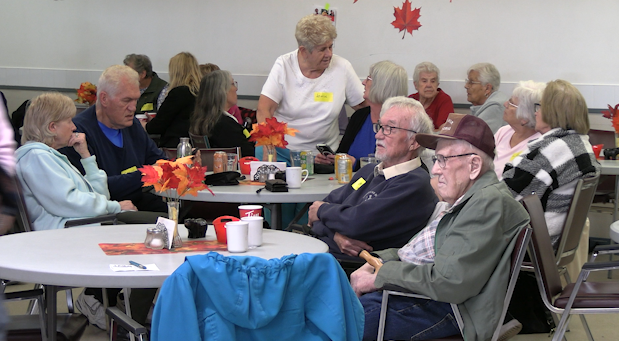
Seniors activity Centre
National Seniors Day

Seniors highlight challenges on National Seniors Day

Oct 1, 2026 | 3:47 PM


PRINCE GEORGE – National Seniors Day was marked in Prince George with a dual focus on advocacy and innovation, as local organizations highlighted both the challenges facing older adults and emerging solutions designed to help them age well in northern communities.

The Council of Seniors used the occasion to draw attention to several pressing issues affecting the region’s growing senior population, including affordable housing, food security, access to family doctors, accessibility and transportation.

Council representatives said these concerns have become increasingly important as the number of seniors continues to grow across northern British Columbia.

“One of the major ones is seeing an affordable housing market, which is a big one, and also food security, which is also a big one that we would actually like to see some change,” said Malhar Kendurkar, Executive Director for the PG Council of Seniors.

The organization is also calling for greater attention to health-care access, particularly the ongoing shortage of family physicians in many communities.

While housing and health care are often discussed at provincial and federal levels, advocates say local governments can also play a role by supporting transportation systems, improving accessibility and encouraging development that meets the needs of older adults.

Transportation remains a significant concern, especially for seniors who no longer drive and rely on public transit, community services or family members to get to appointments, grocery stores and social activities.

Kendurkar noted that many of the issues facing seniors today differ from those experienced by previous generations.

For decades, many retirees in northern B.C. chose to relocate to warmer regions such as the Lower Mainland or the Okanagan after leaving the workforce. That trend has shifted dramatically as housing prices and the cost of living have increased in southern parts of the province.

“Back in the day, after seniors retired from working 35 or 40 years of their life very hard, they used to move down to the Lower Mainland and Kelowna where it was warm,” said Kendurkar.

“But now it’s not the case anymore because things are really expensive. They can’t afford to move down south, so they have to stay here where the housing is relatively affordable.”

As more seniors remain in northern communities, the need for services and infrastructure that support aging in place continues to grow.

Just a short distance away from the council’s awareness event, the National Innovation Hub for Aging in the North at the University of Northern British Columbia hosted an Age Well Innovation Tech Day to showcase technologies designed to help seniors remain independent and active.

The event featured demonstrations of products and research projects aimed at improving daily life for older adults through practical innovations.

Dr. Shannon Freeman, who is involved with the aging hub, said helping seniors stay in their own homes and communities is a key goal of the organization’s work.

“A lot of these solutions can help older adults age well in the community,” Dr. Freeman said. “Things that help them in their own home and help them be independent and thrive where they want to be.”

Dr. Freeman noted that while northern seniors can face unique challenges due to geography, climate and distance from major urban centres, many technological solutions can be adapted to meet those needs.

Researchers are also working closely with older adults in the North to ensure products are designed with rural realities in mind.

One example highlighted during the event was a device called Steadiwear, which helps reduce tremors and improve mobility for users. Researchers say feedback from northern seniors has been instrumental in refining technologies and making them more effective in smaller and more remote communities.

“This product, for example, steadies tremors so that seniors are more mobile,” Dr. Freeman explained.

She added that the participation of older adults in research and testing is helping Canadian innovators better understand what is needed outside large urban centres.

“The needs of older adults here in the North that are engaging in research and working with us is actually informing the design of those technologies to make it better and to make it work in our rural communities,” she said.

Freeman believes that continued collaboration between seniors, researchers and technology developers will lead to more effective solutions for aging populations.

“The more engagement we’re able to get with older adults here, and to share that information with our Canadian startups, innovators and developers, the more we’re able to create solutions that actually meet the needs of older adults here in the North,” she said.

Although the day showcased both advocacy efforts and technological innovation, organizers said the overall message was one of recognition and respect.

National Seniors Day provides an opportunity to celebrate the contributions older adults have made to their communities while also examining the challenges they continue to face.

Whether through calls for more affordable housing, improved access to food and health care, better transportation options, or innovative technologies that support independent living, local organizations say ensuring seniors can thrive remains a community-wide responsibility.

As Canada’s senior population continues to grow, advocates and researchers alike agree that solutions will require cooperation across all levels of government, community organizations and private-sector innovators.

For many in Prince George, National Seniors Day served as both a celebration of older adults and a reminder that creating age-friendly communities remains an ongoing effort.