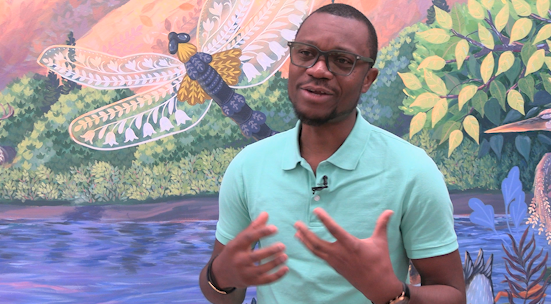
Council Candidate Anthony Okechukwu
Civic Election

Civic candidates confront discrimination during election campaign

Oct 7, 2026 | 3:37 PM


PRINCE GEORGE – Putting your name on a ballot means opening yourself to public scrutiny. In a healthy democracy, candidates expect their ideas, policies and qualifications to be debated. But some local candidates say they have faced a different kind of criticism during the current municipal election campaign: personal attacks and discrimination.

Prince George city council candidate Anthony Okechukwu says he has experienced a series of troubling incidents since entering the race, ranging from vandalized campaign signs to what he describes as discriminatory behaviour directed toward him because of his background.

Okechukwu said it has been difficult to speak publicly about the issue because he never expected to encounter such attitudes in a community he considers home.

“Prince George is a great place. Canada has been a wonderful country for me, my family and every other settler from different parts of the world that are in here,” he said.

Since becoming an official candidate, Okechukwu said his campaign posters were repeatedly vandalized. While that activity eventually subsided, he said other forms of hostility followed.

“I’ve been struggling so hard not to come this way or have to talk about discrimination during this election period in this city,” he said. “If somebody woke me up and said, ‘Anthony, this is something you’re going to have to battle against,’ I wouldn’t believe it.”

Okechukwu said he has built a life in Prince George, volunteering in the community and developing a career in Canada. He said he sees no reason why anyone should face discrimination simply because they choose to seek public office.

“It’s totally unfair that in this time and age, in this great country, certain folks feel that certain person shouldn’t be running for an election,” he said.

While he acknowledged that voters will not agree with every candidate, he argued that election campaigns should focus on policy differences rather than personal attacks.

“If you feel that my mandate doesn’t resonate with you, it’s okay. Don’t vote for Anthony,” he said. “But if it resonates with you, vote for me. I’m here to serve this city. Don’t attack the person. Attack the mandate that the person is bringing out.”

His experience is not the only example of personal criticism emerging during the campaign.

In a separate incident, another city council candidate was reportedly targeted on social media with comments about her physical appearance. The incident sparked discussion among candidates and community members about the tone of political discourse both online and offline.

According to University of Northern British Columbia political science lecturer Jason Morris, technology has transformed political participation, making it easier than ever for people to engage with civic issues. However, he said that increased accessibility has also made hostility easier to spread.

“Technology has made political participation a lot easier, and there’s positives to that,” Morris said. “But it’s also really lowered the cost of hostility.”

He said individuals who post comments online often do not face the same social pressures that would exist during face-to-face interactions.

“A keyboard warrior doesn’t encounter the same social constraints that they would if they were to unleash their opinions in a face-to-face conversation,” he said.

As a result, Morris said a relatively small number of people can create the impression that public hostility is widespread.

“It appears in the online environment that public attacks and criticism are much more prevalent,” he said. “That is because it’s typically a much smaller handful of keyboard warriors that are generating a disproportionate amount of their vitriol.”

Morris stressed that criticism itself is not a problem. In fact, he said vigorous debate is an essential component of democratic elections. Candidates should expect scrutiny regarding their qualifications, policies and campaign promises.

“Putting your name forward for public office is going to bring yourself some scrutiny and criticism, and that’s a healthy part of democracy,” he said. “We want that.”

The problem, Morris said, arises when criticism crosses the line into personal abuse, harassment or discriminatory remarks.

“Criticism of policies and ideas and qualifications, that’s very different from public attacks or even abuse,” he said.

For candidates, responding to such attacks can be challenging. Morris suggested that engaging directly with hostile comments often risks escalating the situation rather than resolving it.

“It is probably best if a candidate ignores that and tries to move on so as not to inflame the situation,” he said.

Beyond the impact on individual candidates, Morris believes there are broader implications for democratic participation.

He warned that hostile political environments can discourage qualified individuals from seeking public office in the future. When prospective candidates see others subjected to harassment, discrimination or public shaming, they may decide the personal cost is simply too high.

“There’s a larger issue here than personal attack on an individual candidate,” Morris said. “That is the impact on potential future candidates.”

He said many people motivated by a desire to serve their communities may decide not to run if they expect to face relentless personal criticism.

“It’s reasonable to assume, given such an environment, that a person thinking about doing some public service thinks it’s just not worth it,” he said. “I’d rather stay out of it for my own mental health, and that’s a real loss to our community.”

Okechukwu agrees. He said political differences should never become excuses for discrimination or exclusion.

Prince George, he said, is a city built by people from diverse backgrounds who have come together to build a community. He believes that diversity should be reflected in local democracy and protected from intolerance.

“We are a city of diverse people,” he said. “We are a city that welcomes people.”

Despite the challenges he has encountered, Okechukwu said he remains committed to the campaign and to serving the community if elected. He said neither criticism nor discrimination will deter him from participating in the democratic process.

His message to voters is simple: judge candidates by their ideas, their qualifications and their vision for the city.

“I’m here to serve this city,” he said. “Judge me by what I’m saying and what I’m hoping to do for Prince George, not by the colour of my skin.”

As election day approaches, the incidents have sparked renewed discussion about the importance of respectful political debate. While disagreement is an unavoidable and necessary part of democracy, candidates and observers alike say there is a clear distinction between challenging ideas and attacking individuals. Maintaining that distinction, they argue, is essential to ensuring that people from all backgrounds continue to feel welcome in public life.