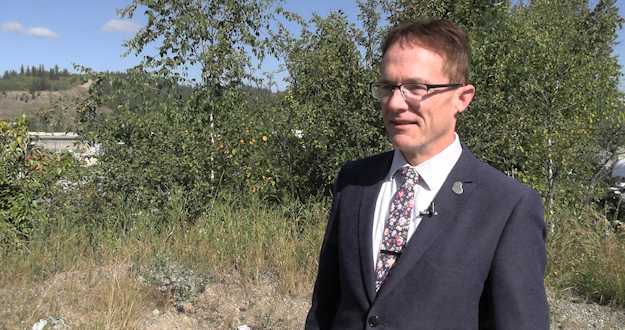
Jason Morris
Provincial Election

UNBC political lecturer questions how much leaders’ debates really matter

Oct 15, 2026 | 3:55 PM


A televised leaders’ debate may be a fixture of an election campaign, but a University of Northern British Columbia political scientist says voters should be cautious about placing too much importance on what happens on the debate stage.

Jason Morris, a political science lecturer at UNBC, says leaders’ debates can offer voters a glimpse of how politicians respond under pressure, but their ability to change minds or determine the outcome of an election is often overstated.

“Leaders debates are election activities. We always have,” Morris said. “But their ability to help voters decide who to vote for is overestimated. And I think, too, it’s overestimated, their impact on an election campaign’s ultimate outcome.”

The three-way debate saw the party leaders challenged on some of the major issues confronting British Columbians, including the province’s finances, housing, health care and the cost of living.

But Morris said much of what voters heard during the debate had already been aired throughout the campaign, particularly on social media.

He argues the changing media environment has only intensified the pressure on political leaders to reduce complicated problems to short, memorable statements.

“We’ve had the so-called 24-hour news cycle for a few generations now, but social media has accelerated that push to have things boiled down to eight seconds,” Morris said.

“Sound bites, leaders debates are actually all about that. They’re not really the place to dig deep into some nuanced policy.”

Morris points to housing as an example.

A moderator can introduce affordable housing as a problem that has challenged the province for decades, he said, only for a politician to be given a matter of seconds to explain what they would do about it.

That structure leaves little room to explore the complexities behind major policy questions.

Morris also saw no single moment in the debate that appeared likely to fundamentally reshape the campaign.

Political history has produced memorable exchanges between candidates, but Morris said those “gotcha” moments are rare. In a modern campaign, an obvious attempt to manufacture one could also come across as rehearsed.

Nor did Morris crown a clear winner.

Instead, he expects each political camp to highlight the moments that cast its own leader in the best light while focusing on the mistakes of the opposing candidates.

“The leaders are all going to have their teams and their supporters over-emphasize their little gains and downplay their missteps,” Morris said. “So then their own detractors will do the exact reverse for that.”

He compared the nearly two-hour exercise to a shift on the ice in hockey, where a player might make a good shot one moment and miss a pass the next.

That does not mean debates have no value.

Morris said they provide an opportunity to watch political leaders perform under pressure, something that is undeniably part of leading a province.

But he argues that confrontational debates are less effective at demonstrating another important political skill: working with others.

“We see in debates an opportunity for us to view how leaders hold up under pressure. And indeed, that’s a big part of the job,” Morris said.

“But an even bigger part of the job in politics is trying to work together and find compromise among competing interests in the legislature and in society.”

“Debates aren’t good venues for that part of running the province.”

Morris said that raises a larger question about why leaders’ debates remain such a central part of election campaigns.

“I think overall that debates are something we just keep doing, and we do them because we think we have to,” he said.

He suggested there may be other ways of providing voters with more objective measures of how political leaders perform.

For Morris, another notable feature of the debate was not what appeared, but what did not.

There were few surprises in the policy questions put before the leaders. Instead, the debate largely revisited issues and arguments that have already been circulating during the campaign and through social media.

And Morris offered perhaps his sharpest assessment after the debate was over.

“The debate covered a lot of ground in various policy areas, but it strikes me that all of those matters could have been dealt with right now if the legislature were still sitting,” Morris said.

“We didn’t need this election.”

His comments put the focus beyond which leader delivered the best line or stumbled at the wrong moment.

For voters, the bigger question may be how much a debate can really reveal about the people asking to govern, particularly in a campaign where political messages reach voters constantly through social media, news coverage and partisan communications.

The leaders may have spent close to two hours debating the issues, but Morris’s assessment suggests the campaign is unlikely to be defined by one night on a debate stage.