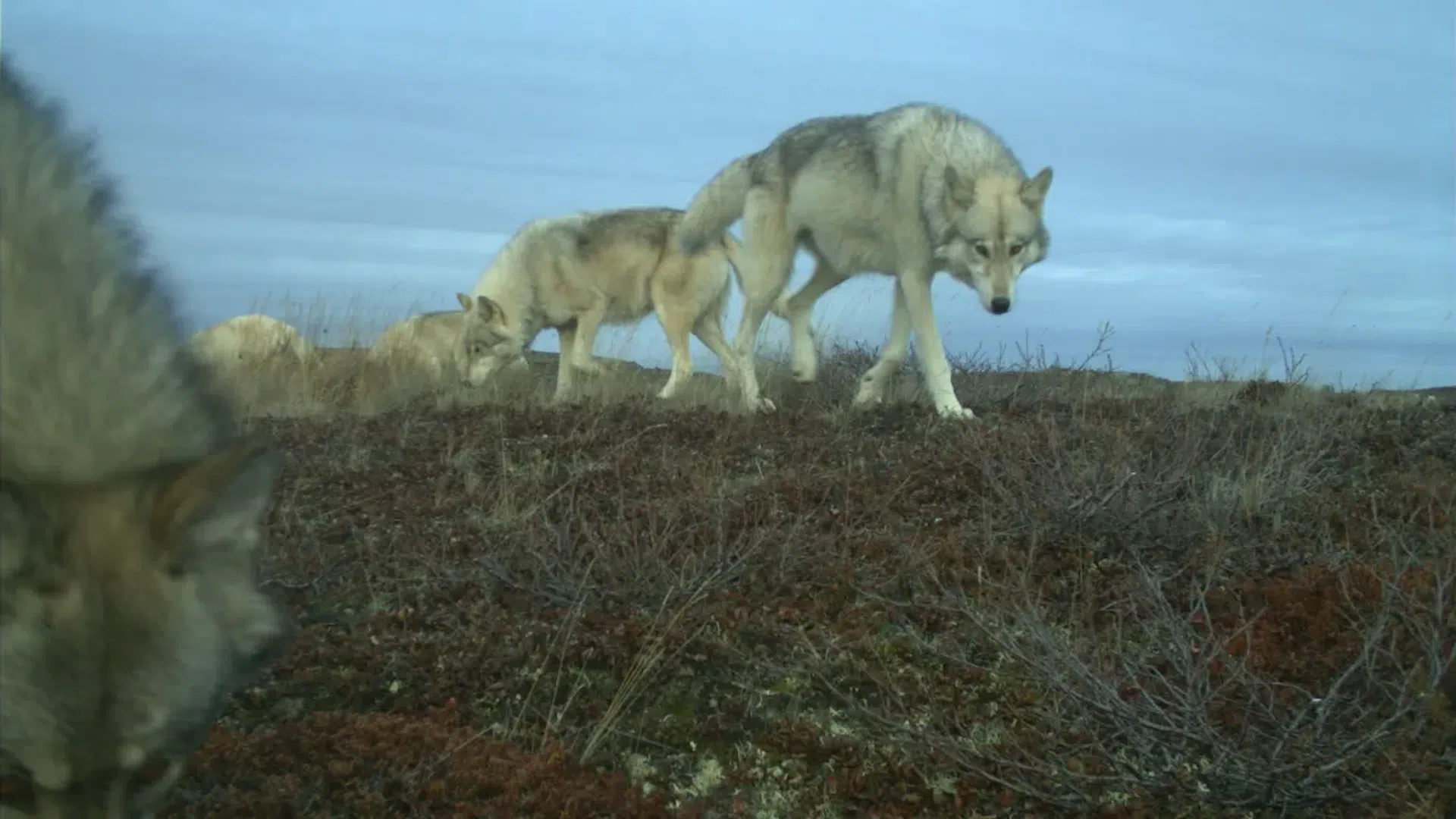
UNBC researcher leads project to study impacts of wolf control on caribou recovery
-
Share on Facebook
-
Share on Bluesky
-
Share on X
- Copy Link
PRINCE GEORGE – UNBC Ecosystem Science and Management Associate Professor Dr. Jamie Gorrell is collaborating with community, government, and academic partners on the Dìga Project to address the decline of caribou populations in northern Canada, which has prompted wolf control measures to reduce predation. Dr. Gorrell’s research examines the effects of these programs on wolf health, diet, genetics, and pathogen dynamics.
With funding from the Natural Sciences and Engineering Research Council (NSERC) and MITACS, Gorrell and his team are analyzing 15 years of data gathered by Indigenous and resident hunters, as well as organizations and governments. This work aims to illuminate the consequences of wolf control on both species.
Named after the Tli?cho word for wolf, Dìga represents the deep connection to the northern communities involved in wolf management. The research team includes co-leads from the University of Saskatchewan and various government researchers who will explore wolf diets and genetics, and monitor pathogens to understand their impact on caribou. They will also investigate how these factors have changed over time as harvest levels rise.

