City of Prince George

Prince George looks to clear up rules around urban beekeeping

Oct 14, 2026 | 9:20 AM

PRINCE GEORGE, B.C. – The City of Prince George is taking a closer look at its bylaws governing urban beekeeping after local beekeepers raised concerns about being told to remove hives from residential properties.

Council has directed administration to return with a bylaw amendment that would allow an unspecified number of hives on single-family residential properties within city limits, regardless of whether the properties are on Agricultural Land Reserve land.

The move is intended to resolve uncertainty between existing city rules and how they have been interpreted.

Coun. Corey Ramsay, who is also a beekeeper, says the city’s Animal Control Bylaw does not specifically define bees as livestock or clearly prohibit beekeeping. However, she says urban apiaries can conflict with the zoning bylaw.

“It’s not included in the livestock definition, so it’s always been interpreted as allowed. But it does conflict with the zoning bylaw,” Ramsay said. “And so recently, some local beekeepers did receive cease and desist letters from bylaw for being in contravention of the zoning bylaw.”

The city’s consolidated Zoning Bylaw No. 7850 was most recently revised on August 17, 2026.

Ramsay said the goal is to provide clarity and establish rules that recognize urban beekeeping.

“So really, we just wanted to provide clarity that, you know, council supports urban beekeeping,” she said.

Administration will now have to examine what specific requirements could accompany an amendment. Ramsay said that work could include considering how close a hive can be placed to a property line and determining how many hives should be permitted on an individual residential property.

She has also asked city staff to consult with people who keep bees locally as they develop recommendations.

“And I’ve asked that they do consultation with the local beekeepers if they’re going to make those sorts of recommendations,” Ramsay said.

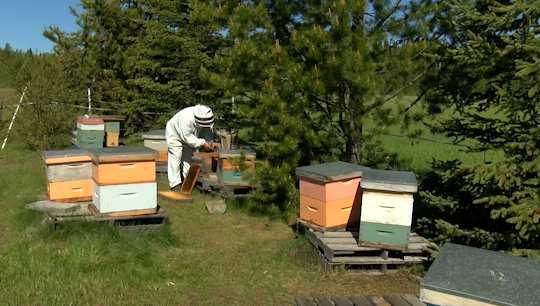
Urban beekeeping is already happening in Prince George.

Barry Clark with the Prince George Beekeepers Association says there are many beekeepers keeping hives on city lots. He says successful urban beekeeping also places significant responsibility on the beekeeper.

“Talk to your neighbors before you introduce bees onto a city lot,” Clark said. “Be aware of where you’re located. Are you next to a school ground or a playground? And that sort of thing.”

In Prince George, he says bear awareness is another important consideration.

“You have to, in our neighborhood here, no matter where you live in Prince George, you have to be aware of bears and you need to take precautions,” Clark said.

Clark describes beekeeping as a complex and potentially expensive pursuit, something he says encourages experienced beekeepers to take care when deciding how and where their colonies are managed.

“Most beekeepers that have been at it for a few years are very careful about how they manage their bees and how they place them,” he said.

The council recommendation also connects the issue to food security and pollination, arguing that honey bee populations play a role within the city.

Beekeeping is also subject to provincial regulation. Material presented with the council recommendation says apiaries must be registered with the province regardless of whether they are on ALR land or within municipal boundaries.

The recommendation also raises concerns about what could happen if urban beekeeping were prohibited rather than regulated. Local beekeepers could be required to relocate their hives, potentially triggering provincial requirements when colonies are moved between bee districts.

Ramsay says providing certainty for those already keeping bees in Prince George is an important part of the discussion.

“I think just giving peace of mind to beekeepers is really important,” she said. “There’s a lot of hives within the city limits.”

She also pointed to previous council discussions surrounding food security as well as herbicide and pesticide use as reasons to consider the role of pollinators when developing city policy.

For now, there is no final number for how many hives would be allowed on a residential property, nor have details such as setbacks been established. Those are among the issues administration has been tasked with examining before bringing an amendment back for council’s consideration.

For Clark, having bees and homes in the same neighbourhood can work, provided beekeepers recognize the responsibilities that come with maintaining colonies in an urban setting.

And for council, the next step is establishing rules that make clear where urban beekeeping fits within Prince George’s bylaws.