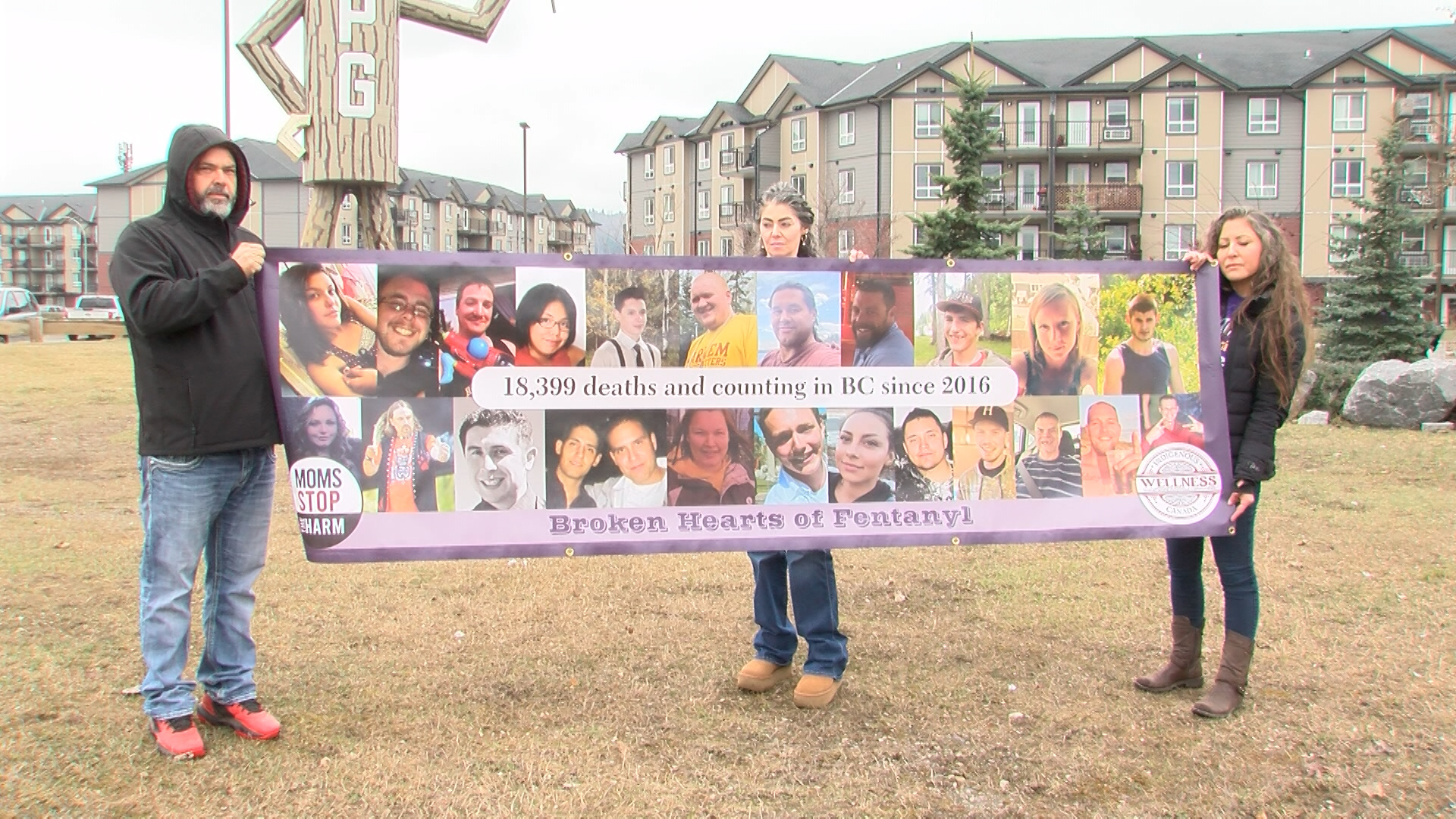
Stephanie Carr (left) and Michelle Miller (right) are among the hundreds impacted in Prince George from the loss of loved ones due to the toxic drug crisis.
Toxic Drug Crisis

Prince George mourns thousands of lives lost on ten-year anniversary of public health emergency

Apr 14, 2026 | 2:54 PM


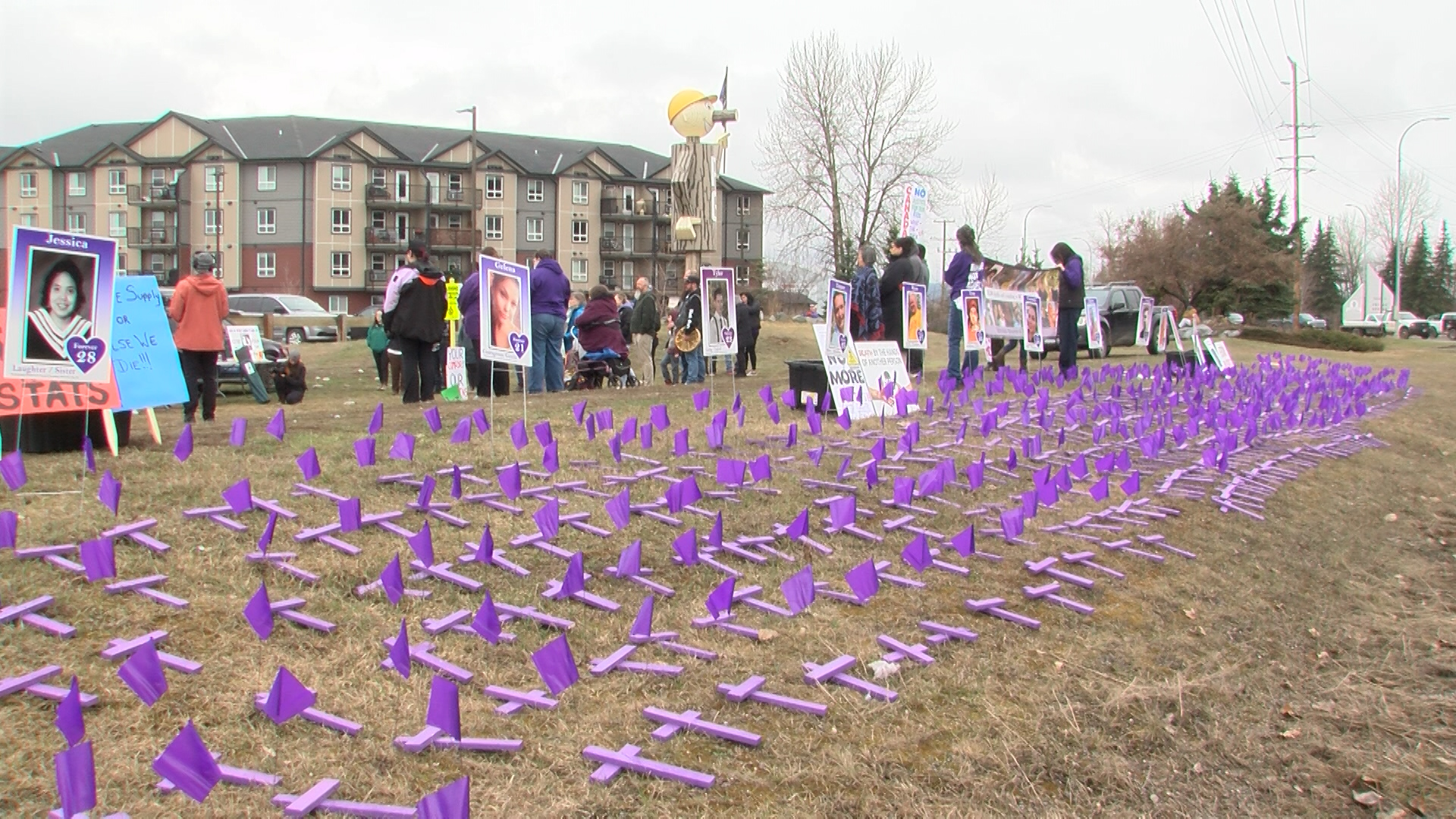
PRINCE GEORGE – Today (April 14) marked the ten-year anniversary of the day British Columbia declared the toxic drug crisis a public health emergency, and one decade later this crisis has seen close to 20,000 lives lost, as of the BC Coroners Services’ data of 2016-2025 unregulated drug deaths. To recognize the day and honour the thousands of lives lost, a gathering was held at the intersection of Highway 16 and Highway 97.

“It is real lives lost, and I was thinking that the night that I found him in our bathroom, I was thinking to myself, like, next month he is going to be a number. But he was the love of my life, and he’s gone, and he was gone in an instant,” said Stephanie Carr, who lost her husband in February due to toxic drug poisoning.

Carr’s husband, Gordon, was one of 586 in Prince George to die due to toxic drugs since the public health emergency was declared, and she says each and every person lost is a tragedy, not a statistic, in a crisis that has seemed so impossibly large to address.

“He struggled for a long time, but he was also a really brave, really resilient man, but he struggled with addiction most of his life, and he got clean over and over again and he tried and he tried and tried,” Carr said.

“He was employed, we were together, he had a house, but when he did relapse and we tried to get help, it’s not as easy as people think it is, right? So he was clean for seven years, and he died less than a month later,” she continued.


She hopes her story highlights how important destigmatizing drug use is, as she notes Gordon’s story of a man who had a wife, two kids, a home, and was employed, often isn’t what people think of when it comes to the toxic drug crisis, but it’s a crisis that can impact any home and leave behind immense heartbreak.

“There’s just so much shame and secrecy around it, he really didn’t talk about it with a lot of people. Most of his friends were shocked, and I’m left with the pieces of what to do now,” she said.

The “instant” nature of losing a loved one is a particularly challenging aspect of this crisis, with Shawntell Lilley of the Broken Hearts of Fentanyl saying her son Tyler was lost due to one cigarette.

“My son lived with us, he came across some cigarettes with fentanyl in them. He smoked them and he died,” Lilley said.

“I don’t know if he found the cigarettes or if he was given the cigarettes, but the cigarettes had pure fentanyl in them, there was nothing else in them. It was just the three different types of fentanyl, the coroner said that it was a concoction to kill,” Lilley continued.


You may never expect the tragedy to impact you personally, but those attending the gathering say it can, and has, impacted families suddenly, so continuing to raise awareness surrounding toxic drugs is a key goal for those who attended to help save more lives.

“Addiction doesn’t know race, it doesn’t know tax bracket, it doesn’t know religion, it doesn’t know gender, it doesn’t care. It boils down to trauma,” said Daniel Roy, Co-Founder of the Peer Guardian Project.

“People think if they look away it’s not happening, but it’s happening,” Lilley added.

Even for those who are seeking help and supports, like Carr’s husband, she says there are challenges in accessing it so improvements to the system must be made.

“He did want help and it wasn’t available. We made an appointment for an intake meeting and had to wait ten days, and I found his body that night. So it was ten days to get a safe supply, and he went out and purchased a lethal street dose within what, 20 minutes? It takes no time at all,” Carr said.

On safe supply, many who attended believe it should return, saying it could save many lives.

“The people that were actively using safe supply and successfully getting off street drugs are going back to street drugs, and it’s toxic and it’s killing them,” Roy said.

Addressing this decade-long crisis and saving lives doesn’t have one clear, easy answer, but one thing everyone who attended agrees on is that a community focused approach and kindness could go a long way towards saving lives.