Transportation

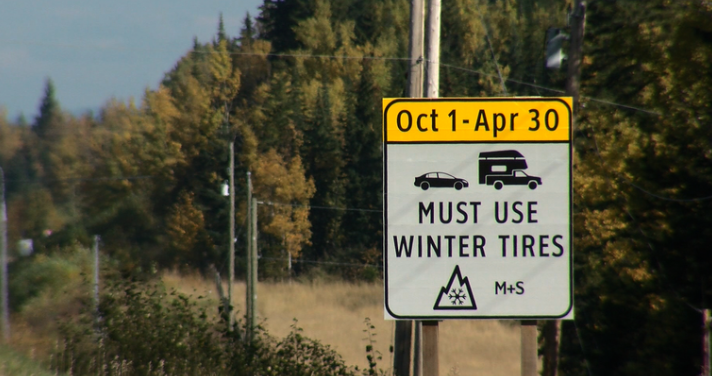
Winter tire requirements take effect across B.C. on October 1

Sep 29, 2026 | 11:49 AM

PRINCE GEORGE — Drivers across British Columbia are being reminded that winter tire regulations take effect October 1, but safety experts say meeting the minimum legal requirement may not be enough for challenging winter conditions.

Road Safety at Work has launched its annual Winter Driving Safety campaign, encouraging motorists to choose tires based on the conditions they are likely to encounter rather than simply selecting tires that satisfy provincial regulations.

Under B.C.’s winter tire law, passenger vehicles and light trucks travelling on designated routes must be equipped with tires displaying either the M+S (mud and snow) marking or the three-peaked mountain and snowflake symbol.

However, Trace Acres, Program Director for Road Safety at Work, says the two tire types do not offer the same level of winter performance.

“Winter tires aren’t just for snow,” Acres said. “They give you more grip and control when temperatures drop below 7 C, which can happen long before the first snowfall.”

Road Safety at Work recommends drivers use tires featuring the three-peaked mountain and snowflake symbol. The organization says those tires are specifically designed to remain flexible in colder temperatures and provide better traction on cold, wet, snowy and icy roads.

According to the campaign, winter tires with the three-peaked symbol can reduce stopping distances by as much as 33 per cent compared with other tire types in poor driving conditions.

Drivers who already own winter tires are also encouraged to inspect them before installation. While the legal minimum tread depth is 3.5 millimetres, Road Safety at Work recommends at least 6.5 millimetres of tread to help maintain adequate traction and braking performance.

Motorists should also check for uneven wear, damaged rubber and proper tire pressure, as colder temperatures can significantly reduce air pressure and impact a vehicle’s handling.

The organization also stresses that vehicles should be equipped with four winter tires rather than a mix of winter and non-winter tires to ensure stability and control.

B.C.’s winter tire regulations remain in effect until March 31 on most designated highways and until April 30 on routes that pass through mountain passes and regions prone to heavy snowfall.