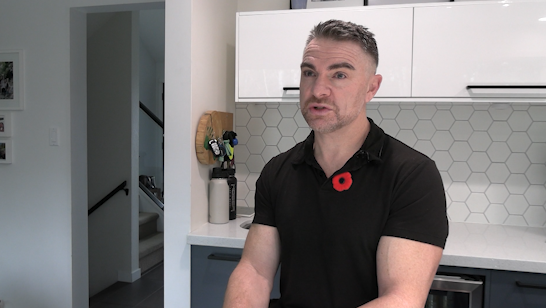
Dean Coleman
Dean Coleman

B.C. cancer patient fights for access to treatment recommended by his doctors

Nov 5, 2026 | 3:50 PM


PRINCE GEORGE – For more than a decade, cancer has repeatedly returned to Dean Coleman’s life.

Now, after three major diagnoses and multiple surgeries, the B.C. man says he is facing a different kind of fight: gaining public funding for a treatment his medical team has recommended, but which he says falls outside provincial funding criteria because of where his cancer began.

Coleman’s cancer journey started in 2012, after months of feeling ill led doctors to discover a tumour in his lung.

“They removed the lower right lobe of my lung and then surveillance from there,” Coleman said.

At the time, he said, the tumour was described as a carcinoid tumour. He was monitored for five years and eventually considered cancer-free.

But the cancer returned.

In 2020, Coleman was diagnosed with a roughly six-inch tumour in the right side of his liver. That December, he underwent a liver resection.

Two years later, another tumour was discovered in his right lung. Surgery in Vancouver removed the middle right lobe.

Then scans began showing spots on the left side of his liver.

“After further investigation, they realized there were three tumours,” Coleman said. “Initially one was noticed, then two and then three. So it became more complicated.”

Doctors treated the largest tumour with radiation, while another smaller tumour was treated with ablation. When a third appeared, Coleman says localized treatments were no longer considered an option because of concerns about damaging his liver.

He began receiving lanreotide, a monthly injection intended to control the neuroendocrine tumours.

For more than a year, Coleman says it worked.

“The results were great, but the July scan compared to the February scan showed progression,” he said. “And that’s a red flag to look for other options.”

That led his medical team to consider peptide receptor radionuclide therapy, or PRRT, a targeted form of radiopharmaceutical treatment.

Coleman underwent a specialized PET scan to determine whether his tumours had the receptors necessary for the treatment.

He says the results were encouraging.

“The oncology team and the Liver Tumour Board, who review files like mine, so there’s many brilliant minds looking at the case, exclusively have approved that PRRT treatment as the next best option for me,” Coleman said.

The next hurdle was paying for it.

According to Coleman, B.C.’s public funding criteria cover the treatment in certain cases where a neuroendocrine tumour originates in the gastrointestinal tract, but his original cancer was in his lung.

“The disease itself is prime for that kind of treatment,” he said. “But because of that checkbox being my lung primary, not GI primary, it was an immediate denial.”

Coleman and his wife, Janna, began searching for another avenue.

Janna Coleman says she discovered what she understood to be an exceptional pathway through BC Cancer’s Compassionate Access Program for patients who do not meet standard funding criteria.

“We understood there was this pathway that was considered an exceptional pathway for patients that don’t fit the funded criteria,” she said.

The couple asked Coleman’s oncologist to pursue the application. According to Janna, it was denied within hours.

“He really is the epitome of the exception,” she said. “And they’re just choosing to look the other way.”

Jennifer Marchand, CEO of the Canadian Neuroendocrine Tumour Society, says access for cases outside standard criteria can vary across Canada.

“For lung NETs and other cases outside of those criteria, the coverage depends on each province’s own rules, regulations, and exceptional case-by-case requests,” Marchand said.

For the Colemans, the central issue is not whether doctors believe PRRT is appropriate. They say the medical recommendation is clear. Their concern is whether a patient whose disease fails to meet a specific funding criterion can get an exceptional case fully considered.

“We need somebody to go around the funding ‘no’ and advocate for the ‘yes,’” Janna said. “Because apparently there is a clinical ‘yes’ through the exceptional pathway. It needs to be reviewed, and nobody’s done it.”

Coleman says alternatives have been discussed, including oral drug therapy, but he and his medical team favour PRRT as the next option.

He says paying privately would create another daunting barrier.

The couple says they have been told treatment outside the publicly funded system could potentially cost between $150,000 and $200,000, although they do not yet know what the final cost would be. Travelling elsewhere for care could also mean repeated trips, additional medical coordination and significant time away from family.

Janna says a course of PRRT would involve multiple infusions spaced weeks apart, making treatment far from home even more complicated.

Coleman says his preference is not to launch a crowdfunding effort or travel overseas, but to receive the treatment through the Canadian public health system.

“You can get the treatment in Vancouver with a simple review of the file and get some exceptional case funding for this,” he said. “It’s something that I think needs to be let known so that other people don’t slip through the cracks.”

The Colemans also say time is becoming increasingly important.

Dean describes his neuroendocrine cancer as relatively slow-growing, but says his more recent scans have demonstrated significant progression compared with earlier results.

That has left the couple worrying about how long they can continue trying to navigate a system they say provides few opportunities for patients to challenge a funding decision.

BC Cancer was contacted for comment about Coleman’s case.

“Thank you for your request. During the post-election interregnum period, government remains in temporary caretaker mode. Communications are limited to critical health and public safety information. We can share that our care teams are working directly with this patient and their family to explore their treatment options.”

For Coleman, the fight has become about more than his own treatment.

After years of surgery, scans, radiation and medication, he says he wants his experience to expose what he sees as a gap in the system for patients whose circumstances do not fit neatly within established funding criteria.

“There’s exceptions to every [rule]. I mean, it’s cancer. There’s no rhyme or reason to it,” he said.

Coleman says patients facing those exceptions need a way to have someone reconsider their case, examine the medical evidence and advocate for them.

“There’s no voice,” he said. “There’s nothing that a patient can do. There’s nobody you can reach to further review the case, check the science.”

For now, Coleman and his family are still waiting and hoping that a door opens before his cancer takes that choice away.