Photo courtesy: The Prince George Citizen
O'Grady

A look into Bishop O’Grady’s past in Prince George and beyond

Jun 28, 2021 | 5:17 PM

PRINCE GEORGE – Last week Chief of the Lheidli T’enneh First Nation Dolleen Logan called for O’Grady road to be renamed, citing his role in the residential school system.

A look into his past reveals records of at least six indigenous children dying at the Kamloops Indian Residential School, while many records still remain missing.

Before Bishop O’Grady got to Prince George he was deeply involved with the residential school system, working and administering residential schools in both Mission and Kamloops in the 1940s and ’50s.

Rumours and some records of mistreatment during his time with the residential school system also exist, while many are not written records according to curators.

A letter sent to parents in 1948 stated it was a “privilege” to have Indigenous children who attended the Kamloops Indian Residential School home for Christmas.

The ‘Bulldozer Bishop’:

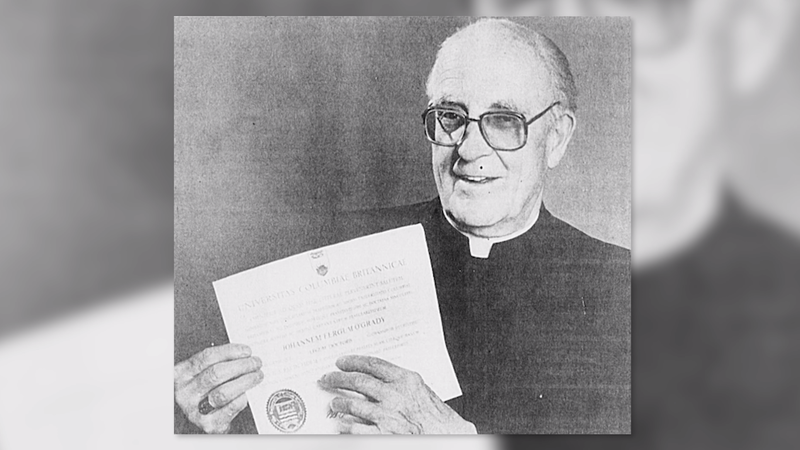
Bishop John Fergus O’Grady arrived in Prince George in the 1950s where he earned the title of the ‘Bulldozer Bishop’.

The title was given to the Bishop because of his work developing and establishing Catholic schools across Northern BC, as many as 14 operated in 1960.

O’Grady opened the doors to Prince George College in 1960 as well, the first integrated school between Indigenous and non-Indigenous children in Canada.

The main school building still stands next to Walmart in College Heights, later called O’Grady High School, the controversial school was permanently closed in 2001.

Bishop O’Grady was also praised for his development of College Heights and Westgate.

A land filled with residents now, was land owned by the Catholic Church until it was sold off for major development.

Many of the street names in College Heights are still associated with the Church as well, in many cases, streets are named after Saints.