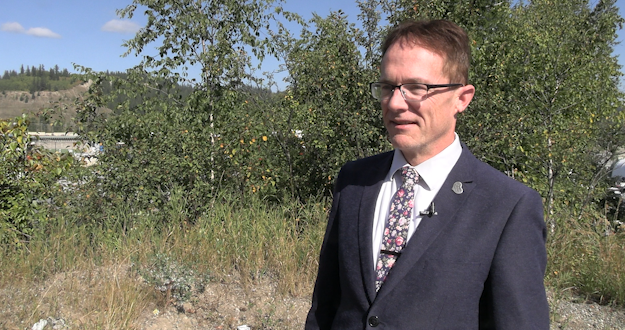
UNBC Political Science Lecturer
Civic elections

Nine-Candidate Mayor’s race headlines local election landscape

Sep 15, 2026 | 3:51 PM


PRINCE GEORGE – With nine candidates running for mayor, an unusually large field of contenders is shaping up to be one of the defining features of Prince George’s upcoming municipal election.

Political observers say the crowded race reflects both public interest in local government and a reaction to what many viewed as a turbulent council term.

Jason Morris, a political science lecturer at the University of Northern British Columbia, says the number of people seeking the city’s top elected position stands out compared to previous elections.

“A large number of people seeking this position is a reaction to a turbulent and controversial council term,” said Morris. “Although the positions of the contestants tend to be moderate, even handed, what you would kind of expect for a local government.”

With voters set to head to the polls on or before Oct. 17, the mayoral race is expected to attract significant public attention simply because of the number of candidates competing for the job.

Morris believes a larger field creates more opportunities for debate and discussion among candidates, potentially increasing public engagement throughout the campaign.

“On the flip side, a large number of candidates for this position is a healthy sign for democracy,” he said. “Far better than having a situation that other places have had in the past where they’re having positions set by acclamation.”

Municipal elections often struggle to generate the same level of excitement seen in provincial or federal campaigns. However, Morris suggests the crowded race could create the kind of competitive atmosphere that draws voters into the conversation.

“If even just to be able to witness some of the spectacle or fireworks of a campaign, it could generate a lot of interest in people to follow this race,” he said.

The mayoral contest is not the only aspect of the election attracting attention.

A notable development this year is the presence of younger candidates seeking public office. Two of the mayoral hopefuls are among the younger contenders in the race, while another young candidate is seeking a seat on city council.

For advocates of youth engagement in politics, that represents an encouraging sign.

Morris says increasing participation by younger residents has long been viewed as an important goal for democratic institutions, particularly at the municipal level where decisions can have an immediate impact on everyday life.

“It would be great to see more youth involvement in our local election campaigns,” he said.

At the same time, he noted serving as an elected official is demanding regardless of age.

“We do know that local government is seen as a stepping stone to higher levels of government elections and seeking those positions,” Morris said. “That being said, there’s a steep learning curve for anybody, no matter how many turns they’ve done around the sun for their age, to doing a great job representing Prince George.”

The presence of younger candidates raises another question: whether younger residents themselves will be motivated to vote.

Historically, younger Canadians have participated in elections at lower rates than older voters. However, Morris says the way younger generations engage with politics has changed considerably.

Rather than focusing solely on casting a ballot, many young people interact with politics through social media, digital discussions and online advocacy.

“They tend to view participation a little bit different than the historical ballot box,” Morris explained. “That is liking and following on social media posts and following people that way, as counting as political participation.”

Whether those online interactions ultimately translate into votes remains to be seen.

Municipal governments make decisions on issues ranging from infrastructure and public safety to recreation and economic development, matters that affect residents of all ages. Campaigns often seek to mobilize voters by emphasizing the direct local impact of those decisions.

Another issue drawing attention in this year’s election is the representation of women among candidates.

While women have made significant gains in provincial and federal politics, the local candidate roster reflects a continuing gender imbalance.

There are no women seeking the mayor’s office in this election, and only five of the 19 candidates running for council are women. Of those five, three are incumbents already serving on council.

The figures have prompted discussion about whether barriers continue to discourage women from pursuing municipal office.

Morris says longstanding perceptions about politics may still influence who decides to run.

“We’ve historically said that the game of politics is kind of this alpha male, masculine kind of position,” he said. “But to an extent that’s also putting down women that somehow are seen as not up to the cut and parry of a political debate.”

He argues those perceptions fail to reflect the realities of public service and political leadership.

Municipal governance requires collaboration, communication and the ability to build consensus among diverse groups of residents and stakeholders. Those skills are not tied to gender, Morris noted, yet traditional assumptions about political leadership can still shape public expectations and candidate recruitment.

Although governments and political organizations have spent years encouraging greater representation of women at senior levels of government, Morris says that progress has not been fully replicated in municipal politics.

“The drive to have women represented at the federal and provincial levels hasn’t yet translated to the local level,” he said.

The reasons can vary. Municipal politicians often balance elected responsibilities with careers and family commitments, while campaigns frequently rely on personal networks and community connections. Those realities can affect who decides to enter a race and who ultimately seeks elected office.

As the election campaign unfolds, voters will have no shortage of choices when selecting the city’s next mayor and council.

The unusually large mayoral field, the emergence of younger candidates and the ongoing conversation around women’s representation each reflect broader questions about civic engagement and participation in local democracy.

For Morris, the most important takeaway may be that people are willing to step forward and put their names on the ballot.

Whether the campaign is remembered for debate, policy discussions or political fireworks, the high level of participation suggests residents remain invested in shaping the future direction of their city.

And with election day approaching, it will be up to voters to decide which candidates will guide Prince George through its next council term.