SHANE LAKE FROGS

Small steps to protect Shane Lake amphibians

Nov 6, 2026 | 10:22 AM


PRINCE GEORGE – Some amphibians are hard to spot when they cross the trails near Shane Lake. That’s why a Prince George resident is working to move them out of harm’s way so people don’t accidentally step on them.

Shane Lake is located in Forests for the World, a 106-hectare park on Cranbrook Hill in Prince George. The park has more than 15 km of trails that wind through different forest habitats and circle the lake.

Ashley Sutherland started the Shane Lake Amphibian Migration Project. The trails around the lake cross the paths that amphibians use to travel between the water and the forest.

“Toads aren’t that easy to see, and as such there is trampling by the trail users,” said Sutherland.

The SLAM project focuses on four species at Shane Lake: western toads, wood frogs, Columbia spotted frogs, and long-toed salamanders.

Sutherland explained that western toads live in different habitats as they grow. They breed in the lake, and their tadpoles show up early in the summer.

Once they become toads, they spend some time on the shore. Then they move into the forest to feed and hibernate. In spring, they come back to the lake to breed.

Their journey takes them across the same paths that people use.

Sutherland says it’s often hard to see the amphibians on the trail. She wants people to know that there’s a lot of activity in a short time during the summer.

“If you’re coming in during the hottest part of the day from late July to mid-August, you’ll notice a lot of amphibian activity in the public areas, and they’re not easy to spot,” she said. “So if you know they’re there and watch out for them, you might help save some lives.” Sutherland first noticed the issue at the park in 2022. The project did surveys in 2025 and again in 2026.

The most recent work included nine weeks of surveys, three days each week. That added up to about 26 or 27 surveys in total.

The team counted how many amphibians were on the trails and how many died, then mapped the data to see where amphibians were most common.

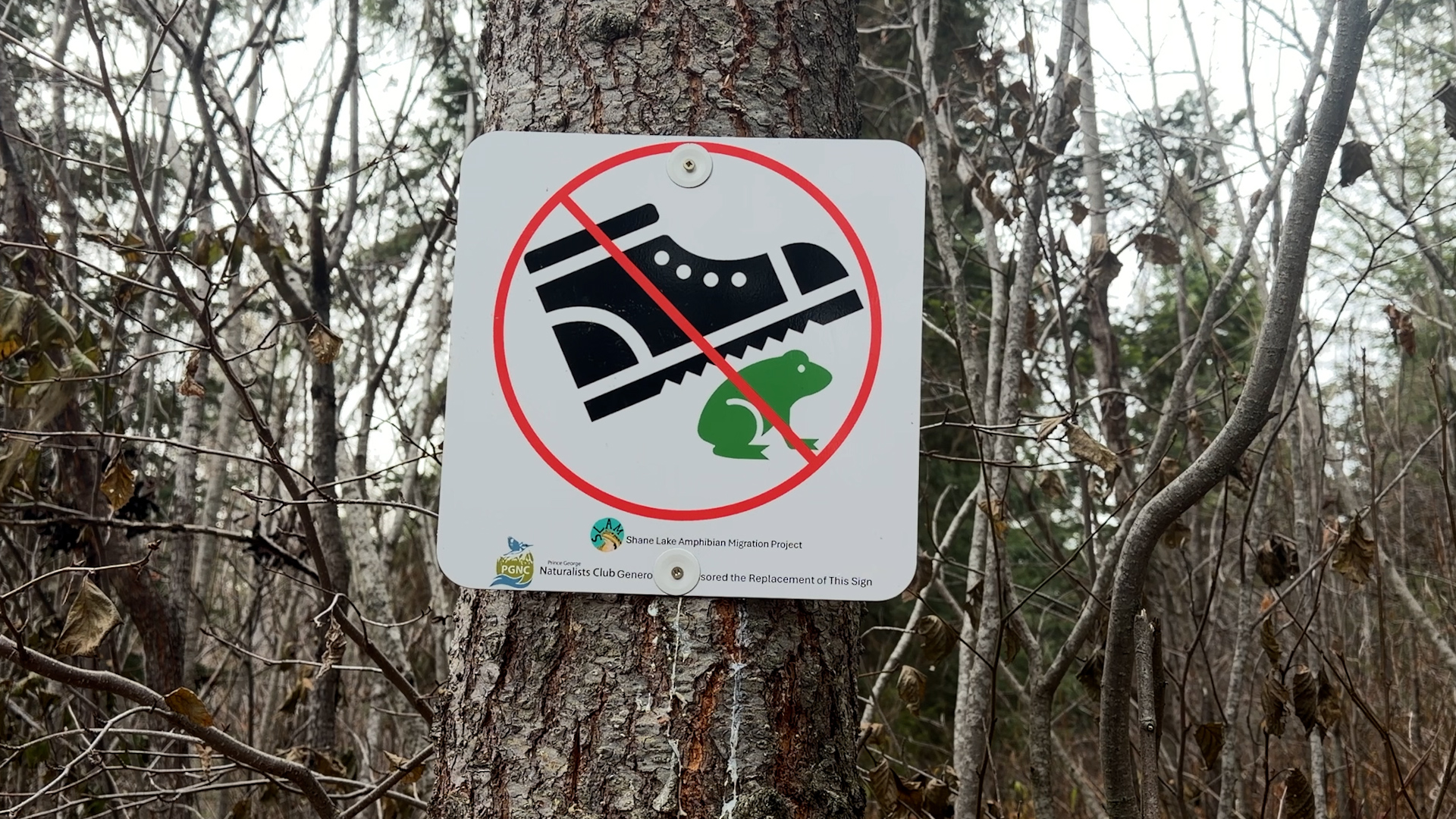
Sutherland said the results could help decide where to focus efforts to protect amphibians. She suggested adding more signs or building more boardwalks. She also mentioned possible underpasses for amphibians or paths for people to cross over migration areas.

Sutherland says city amphibians give people an easy way to connect with nature. Western toads are provincially blue-listed and face risks from development, habitat loss, and pollution.

The SLAM project is selling $5 stickers to help fund their work. You can find them at Books & Company, Deadfall Brewing, Ruckus, and Degrees Coffee at UNBC.

If you can’t donate, you can still help by using the free iNaturalist app to share your observations. To contact the project, email aleza@unbc.ca or find them on Instagram at slamprojectpg. If you’re on the trails, just remember amphibians may be around, so watch your step and go slowly.