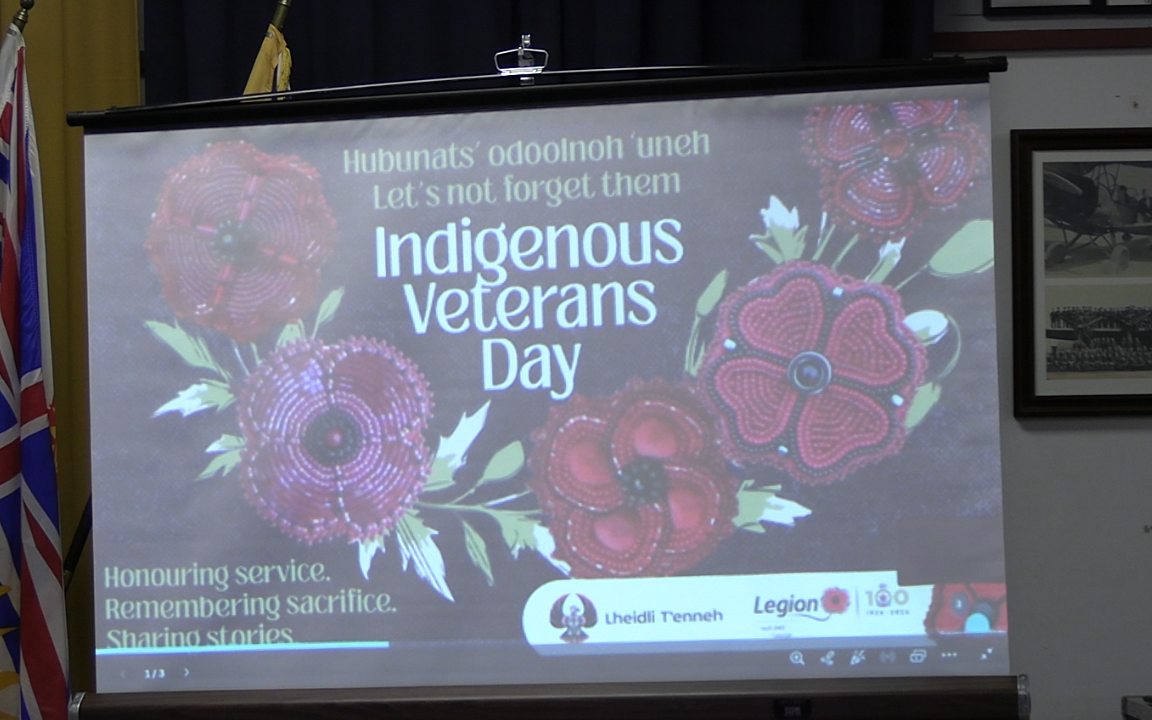
Indigenous Veterans Day

Prince George gathering to honour Indigenous veterans, confront unequal treatment after service

Nov 6, 2026 | 4:05 PM

PRINCE GEORGE, B.C. – They served in the same wars, wore the same uniforms and faced the same dangers, but many Indigenous veterans returned home to a country that did not treat them the same as the soldiers they fought beside.

On Sunday, Lheidli T’enneh First Nation and Royal Canadian Legion Branch 43 will come together in Prince George for a National Indigenous Veterans Day gathering aimed at honouring that service while ensuring the difficult history surrounding it is not forgotten.

The community gathering runs from 11 a.m. to 1 p.m. on November 8 at Royal Canadian Legion Branch 43 and will include drumming, music, recognition of Indigenous veterans, opportunities for reflection and learning, and a shared meal.

It represents a more formal local observance of a day set aside specifically to recognize First Nations, Inuit and Métis people who served Canada.

Jen Rubadeau, communications manager with Lheidli T’enneh First Nation, says the Nation was approached by the Legion about co-hosting an event this year.

“We were happy to be able to come together and bring some light and information and this educational opportunity to honour those who have served in the Canadian military over the years,” Rubadeau said.

The process of preparing for the gathering also became an education for Rubadeau herself.

She says she had been aware Indigenous veterans did not always receive the same treatment as other veterans when they returned home, but researching the event revealed stories and contributions she had not previously known.

“I have done some pretty big deep dives and have learned a lot of really fascinating stories about how they served in the different positions and how they really showed up and were incredible soldiers,” she said.

Those roles included serving as soldiers, scouts, snipers, Rangers, peacekeepers and code talkers.

Code talking particularly stood out for Rubadeau. Indigenous languages could be used to transmit military information over radio, creating communications that enemy forces could not readily understand.

Thousands of Indigenous people served Canada through the First and Second World Wars, Korean War and later military and peacekeeping operations.

Lheidli T’enneh says estimates put the number of Indigenous people who served in major conflicts of the 20th century at more than 12,000, with hundreds losing their lives.

A representative of Royal Canadian Legion Branch 43 says the exact number who served from the Prince George region is difficult to determine, but Indigenous people were part of Canada’s military efforts over generations.

“All I know is that there were many,” he said. “Some of them were fortunate enough to come home. Some of them were not.”

But coming home did not necessarily mean returning to equality.

Many Indigenous veterans served Canada during periods when Indigenous people were subjected to discriminatory government policies and did not enjoy the same rights as other Canadians.

During the First World War, many First Nations people did not have the federal right to vote. Despite that, thousands volunteered for military service.

Lheidli T’enneh says Indigenous people also encountered barriers to entering certain branches of the military.

For many, the inequity continued when the fighting was over.

Some Indigenous veterans were denied equal access to benefits and support offered to non-Indigenous veterans, while others were excluded from land settlement programs designed to help returning soldiers establish farms and businesses.

In some cases, reserve lands were surrendered or used for veteran settlement programs without the full consent of First Nations communities.

Chief Dolleen Logan says National Indigenous Veterans Day provides an opportunity to recognize both the courage of those who served and the treatment many experienced afterward.

“Many volunteered to serve a country that did not yet recognize them as equal citizens, and many faced significant barriers when they returned home,” Logan said in a statement.

“By gathering together, we honour their legacy, acknowledge the challenges they faced, and ensure future generations understand both their contributions and their experiences.”

National Indigenous Veterans Day is observed every November 8, three days before Remembrance Day.

The separate observance is not intended to replace November 11. Instead, it creates dedicated space to recognize Indigenous military service and experiences that have not always been prominent in Canada’s broader remembrance traditions.

Royal Canadian Legion Branch 43 says that distinction does not diminish the shared act of remembrance.

The Legion has worked with Lheidli T’enneh in the past and sees Sunday’s gathering as another opportunity to support Indigenous people in Prince George and bring the wider community together.

“We think that it’s important to reach out and to do whatever we can in Branch 43 Legion to promote and support our Indigenous community,” said Ken Pendergast, representing the Legion.

Three days later, Indigenous veterans will also be part of Remembrance Day commemorations alongside other Canadian veterans.

The November 8 observance traces its roots to advocacy by Indigenous veterans seeking greater recognition of both their military contributions and their experiences.

What is now National Indigenous Veterans Day was first observed in 1993.

For Lheidli T’enneh, the Prince George gathering is also an opportunity to recognize veterans and military families from the Nation itself.

Organizers say the event is open to both Indigenous and non-Indigenous residents.

Community members are encouraged to wear a poppy or beaded poppy and take the opportunity not only to honour those who served, but to learn about the history surrounding their service.

It is that educational component that Rubadeau hopes will resonate with people attending the gathering.

For her, researching Indigenous military history ahead of Sunday’s event uncovered stories that deserve a larger place in Canada’s collective understanding of its veterans.

For Logan, remembrance means confronting both parts of that history: the sacrifices Indigenous men and women made for Canada and the inequities many encountered in the country they returned to.

“We are grateful to partner with the Legion on this gathering as we work together to honour Indigenous veterans, share their stories, and build greater understanding within our community,” Logan said.

The National Indigenous Veterans Day Community Gathering takes place Sunday, November 8, from 11 a.m. to 1 p.m. at Royal Canadian Legion Branch 43 in Prince George.