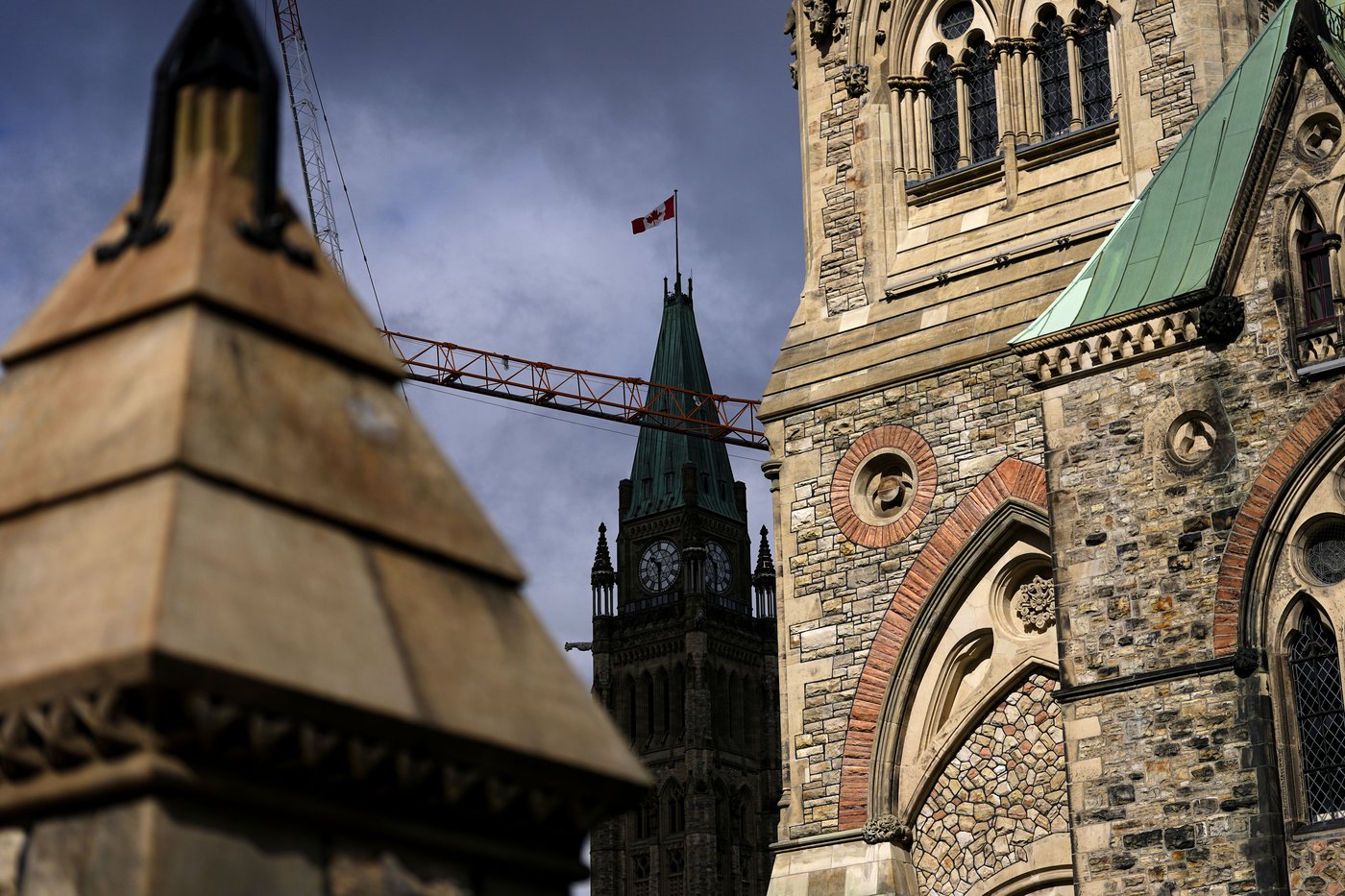
The Peace Tower on Parliament Hill is seen in Ottawa, on Tuesday, Sept. 8, 2026. THE CANADIAN PRESS/Justin Tang

Ottawa won’t say if people misused a now-defunct refugee residency sponsorship policy

Sep 16, 2026 | 9:08 AM

OTTAWA — The Immigration Department refuses to say whether any applicants actually misused a refugee permanent resident sponsorship policy the government allowed to expire last week, citing “potential integrity concerns.”

The policy offered exemptions to allow certain refugees to sponsor a family member for permanent residency who was not listed on their initial application.

Without this exemption, applicants are permanently barred from sponsoring family members for permanent residency if they were not declared on their original application.

Advocates and academics who pushed for the policy said it was most commonly used to sponsor children — including some who had not been born when an application was first made — and LGBTQ+ partners in countries where those relationships are criminalized.

Nir Gepner, an Ontario immigration lawyer with the legal aid clinic Willowdale Community Legal Services, said the best way to uphold the “integrity” of the system is to respect the objectives of the Immigration and Refugee Protection Act, which include facilitating refugee family reunification.

“I don’t know what the integrity of the system means to the minister. I think it’s a general term that is extremely vague,” he said.

“What is the lifetime ban for? For not declaring somebody because they were just born? For not declaring someone because you would be in danger if you declared them? For not declaring somebody because you were in a rush to get to Canada to save yourself?”

He said the number of these binding federal immigration policies — which can be cancelled without consultation — spiked under the government of Prime Minister Justin Trudeau.

Jenny Kwan, the NDP’s immigration critic, said refugees trying to come to Canada should not be punished for circumstances beyond their control. She said the government has offered “no credible explanation” for the policy’s termination.

“They quietly shut it down, and now it is going to have, I have no doubt, significant implications for refugee families in that reunification,” Kwan said.

“So they’re not broadcasting it, it means that they’re not proud of it.”

The policy took effect in 2019 and expired on Sept. 10. Refugee advocacy groups were only informed on Sept. 9 that the government did not plan to renew the policy.

A 2023 memo prepared for then-immigration minister Marc Miller said most people who did not list a family member did so innocently and the exemption posed a “minimal” risk to program integrity. Miller recommended extending the policy for three years.

That same memo said an applicant might not declare a family member for any one of several reasons — including a child’s birth or a marriage taking place after an application was filed, custody challenges, faulty immigration advice or the stigma associated with a child being born out of wedlock.

Undeclared family members eligible for sponsorship under the former policy included spouses, common-law partners, dependent children and grandchildren.

Gepner said he has represented refugees whose families grew after they submitted permanent residency applications. He said they face an impossible choice: file a new application and face further delays, bring the child to Canada and deal with the consequences, or leave the new baby behind.

“I’ve had multiple cases where because of delays … family members are left abroad and you see mothers with their kids in a different country for years, and you see fathers without their families for years and you see shells of people,” Gepner said.

The Canadian Press first asked the Immigration Department on Monday if anyone had misused the policy.

In an email sent late Tuesday, the department again cited “potential integrity concerns” and said it will consider exemptions case-by-case on humanitarian and compassionate grounds. The spokesperson added the government continues to “examine longer-term options” but offered no specifics.

The Canadian Press asked again Wednesday if anyone had actually misused the seven-year old policy.

“We have nothing further to add,” a department spokesperson said.

“It’s fair to say that Canadians expect immigration programs to be applied as intended. And we take seriously our responsibility to put in place policies that people can trust and that serve them well.”

Kwan said ending this policy will have serious consequences for refugee families.

“I have met refugee families who did not know that their young child, as an example, was still alive. They came to Canada and the young child was not part of that application because they thought that they had lost their child. They thought that the child was dead,” Kwan said.

“These things happen because people are displaced. They’re in sometimes a war environment in conflict, they get separated from their loved ones, they don’t even know that possibly their loved ones could still be alive.”

Advocates have criticized the government for saying that exemptions might still be considered on humanitarian or compassionate grounds. They point out that those applications face waiting periods of more than 10 years, according to the government’s own website.

Kwan said the minister should know that ending the undeclared family policy means moving these applications to a “severely backlogged process” that will delay family reunification for years.

The Canadian Council for Refugees sent a letter to Immigration Minister Lena Diab last week demanding that she restore the policy. The council said the decision to revert to what it called “the cruelty of the previous situation” was “inexplicable.”

The department has said the best way prevent lengthy or permanent family separation is for all permanent resident applicants to list all family at the time of application.

Government data shows about 2,000 people used the policy between September 2019 and July 2023, with a 90 per cent approval rate. The department said it would take upwards of 10 days to pull more recent application data.

This report by The Canadian Press was first published Sept. 16, 2026.

David Baxter, The Canadian Press