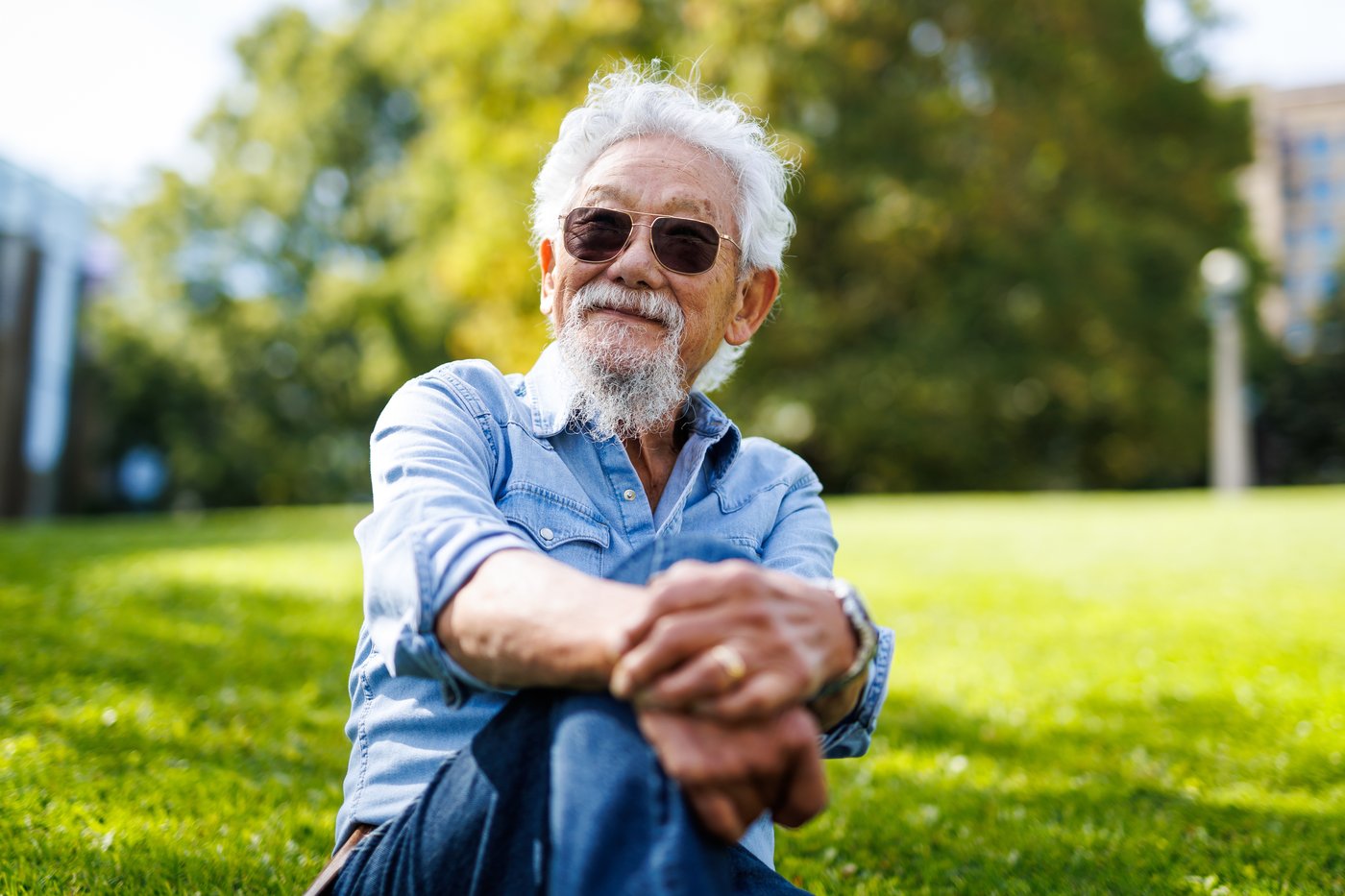
David Suzuki poses for a portrait in Ottawa on Monday, Sept. 21, 2026. THE CANADIAN PRESS/Keito Newman

David Suzuki says Mark Carney is driving Canada ‘into a ditch’ with shift on climate

Sep 23, 2026 | 10:17 AM

OTTAWA — David Suzuki said that when Prime Minister Mark Carney was first elected last year, he celebrated. Having met and interviewed the prime minister before, the national environmentalist icon said he knew Carney understood the challenges of climate change.

But in an interview with The Canadian Press, Suzuki said he now feels he was “wilfully blind” to Carney’s promises of action on climate, despite warnings from his longtime friend the late Stephen Lewis, who predicted the agenda of a banker — and now politician — would supersede Carney’s views on addressing climate change.

“I don’t see that there’s going to be any deviation from the driving of our country into the ditch,” Suzuki said.

He acknowledges that Carney’s actions come as Canadians’ views on climate have shifted to other priorities.

“I think that’s because of that disconnect of what are the really basic things are that keep us alive,” he said.

For decades, Suzuki brought millions of Canadians into the world of science and nature. From their living rooms, viewers of The Nature of Things could learn about the intersection of humanity and nature and its impact on the planet.

Suzuki, 90, retired from hosting the show four years ago, but still wants to talk to Canadians about the environment. This time though, the educational message is tinged with exasperation.

Canadians and people around the world have their priorities wrong, he said.

“Brazil’s Amazon, the greatest terrestrial ecosystem on the planet, has no economic value until it is logged, mined, dammed, or grows soy, cattle, or houses,” Suzuki said.

“So if that doesn’t tell you right there what kind of a f–ked-up system we have, that is exploiting the very things that keep us alive. And we don’t put any value on it.”

Canada’s record on battling the greenhouse gas emissions driving climate change has been spotty. The federal government has committed to multiple different targets since 1990 and despite implementing dozens of new policies to cut emissions, it has never met any of its targets.

Since taking office in March 2025, Prime Minister Mark Carney has pushed many of those policies aside in the name of economic prosperity — particularly as Canadians grapple with the cost of living on a planet that is facing increasingly destructive weather events every year.

He cancelled the consumer carbon tax on his first day in office, repealed a mandate to phase out gas-powered cars in favour of electric models, and scrapped an emissions cap on oil and gas production.

Carney said most of those policies were too divisive and costly and he is looking to introduce cuts over a longer term, with investments in clean technology. He also has backed the idea of another oil pipeline to the West Coast and has adjusted some policies to make it more likely.

Which one of those actions made Suzuki raise his eyebrows the most?

“I haven’t read any of it,” Suzuki said.

“The problem is, it doesn’t really matter to me. Fundamentally, the problem is that the underlying systems that we’ve developed to guide, shape, manage human behaviour have left out the most fundamental thing, which is that our very survival and well-being depends on Mother Earth.

“If you look at our legal, our political and our economic systems, the planet has been left out. The economy is the system that is driving us on the destructive path.”

He doesn’t even give much credit to the government of former prime minister Justin Trudeau, whose government enacted some of the most climate friendly policies Canada has ever had. Even Trudeau, Suzuki argues, didn’t aim high enough.

Suzuki said Carney “understands very clearly what the challenges of climate change represent.”

But he said Carney is advocating for climate action as a banker, with an agenda that suits that title.

“He still believes the economy must be kept going the way it is and that it can be used to keep emissions down and keep the economy going,” he said. “I think it’s impossible.”

Carney was in Strasbourg, France last week to address the European Parliament, on a mission to deepen ties with the EU — particularly on trade, as Canada tried to lessen its dependence on the United States. Canada’s offer to the EU is largely based on its access to resources, including natural gas and critical minerals, but Suzuki said it’s a catch-22.

“(Carney) is standing up to (Trump). Thank God for Mr. Carney for doing that. But our arrangements with Europe, they’re all based on economics,” Suzuki said.

“What does Canada have to sell to these other countries to take our dependence away from the United States? It’s going to be minerals, forests, water, and it’s not based on the fundamental protection of those things. It’s all going to what economic value can we extract. So I think we’re kind of hooped.”

In a statement, a spokesperson for Environment Minister Julie Dabrusin said the government is committed to fighting climate change and reaching net-zero emissions by 2050.

Suzuki said there are two things the government can do right now to get the country’s climate action back on track: set hard targets and declare an emergency.

“When you declare a state of emergency, all these economic and political arguments disappear,” he said. “You’ve got to deal with that crisis now, and that’s what we need. And Mr. Carney could go a long way if he would take his party now and declare state of emergency and get it going now.”

Suzuki also said the media has failed to fact-check messages from world leaders, including U.S. President Donald Trump.

Suzuki said he is still saying the same things he always has, but he’s not sure it’s being received the way it used to be, and figuring out how to fix that has left him at a loss.

“There was a time when, believe it or not, Canadians knew who the hell I was and they listened to me. They took me seriously. But you know, the world is so different now, that I think that kind of celebrity is just not possible.”

This report by The Canadian Press was first published Sept. 23, 2026

Nick Murray, The Canadian Press